
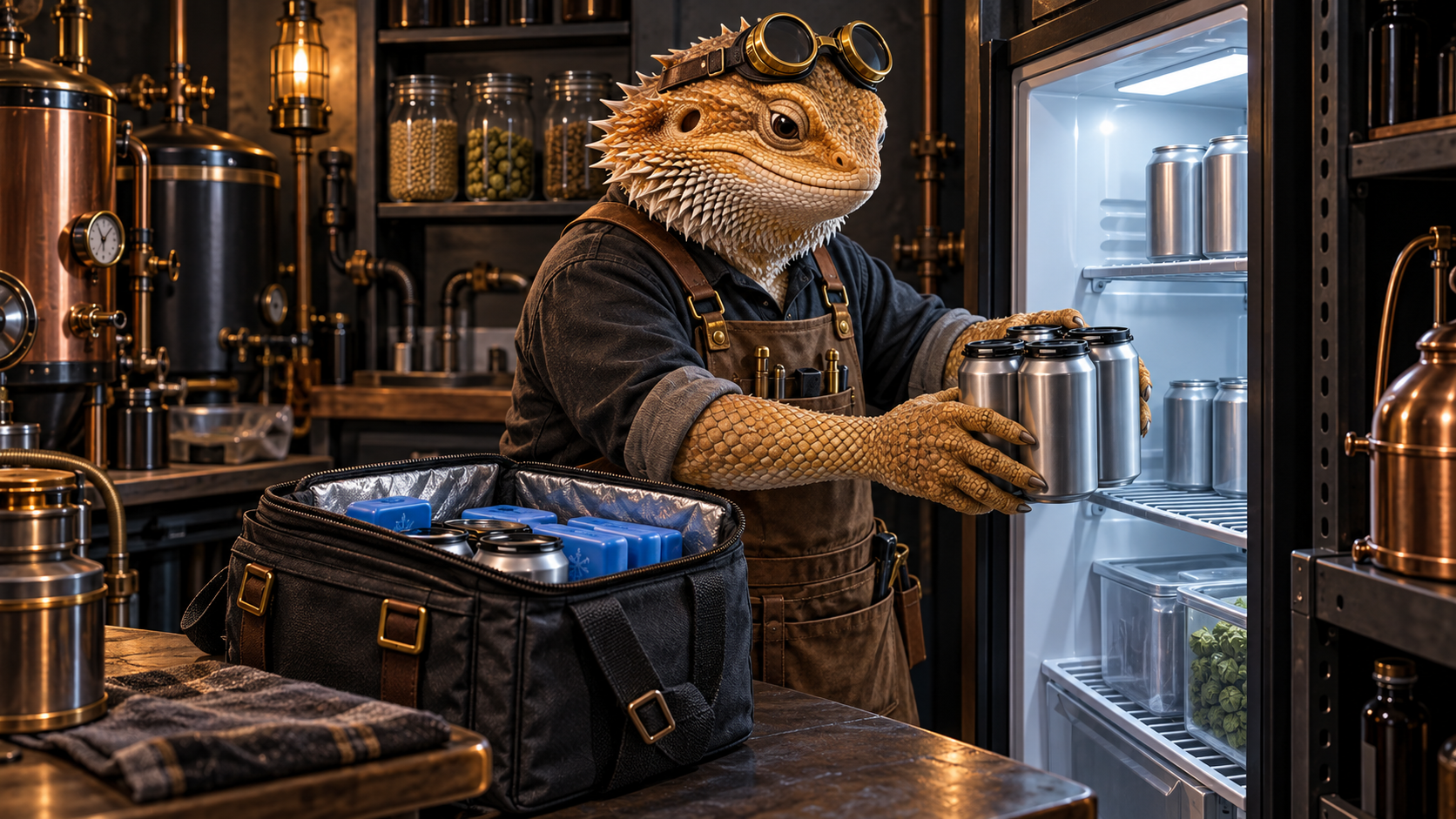
Buying beer at a brewery shortens the distance between the maker and your refrigerator. It does not automatically make everything that happens along that route harmless. A fresh four-pack can still spend the afternoon in a parked car while its owner finishes the day's errands.
The useful plan starts before payment: find out what you are buying, choose a package that suits the journey, and give it a sensible route home. You do not need laboratory equipment. You need a little information and somewhere appropriate to put the beer.
This guide covers that purchase-to-fridge interval. For the longer-term shelf and refrigerator decisions, use How To Store Beer at Home Without Ruining It. The immediate problem is getting the purchase there in the condition you intended.
Ask about this beer, not beer in general
The person at the counter has access to information a generic freshness chart cannot provide. Use it. Ask a few specific questions while choosing the purchase:
- When was this package filled, and what does its date code mean?
- Does it need continuous refrigeration or other special handling?
- What freshness window does the brewery recommend for this beer and package?
- If this is a draft fill, how soon should it be opened, and what changes after opening?
- Given the time and conditions of the trip home, is a different package a better choice?
Keep the distinction between a packaged-on date and a best-before date clear. If you cannot decode a mark, ask instead of guessing. A recent date is useful information, but it does not describe every temperature the package has experienced.
“Fresh brewery beer” also covers several products. A sealed production can, a bottle-conditioned beer, and a growler filled at the taproom are different handling situations. Do not transfer a rule from one to the others simply because they came from the same counter.
Light, temperature, and time do different jobs
The practical science is straightforward enough to guide a purchase without pretending to predict its exact remaining life.
Sierra Nevada's explanation of beer freshness describes how oxygen, heat, and light contribute to flavor changes, and why style, packaging, and storage conditions affect the freshness window. Heat can accelerate unwanted change; an opaque can blocks light, but that does not insulate the liquid from heat. A package that is protected from one problem can still be exposed to another.
Temperature is therefore worth planning around even when the beer is canned. Keep it out of a warm vehicle or direct sun, and use cooling when the journey calls for it. Avoid turning a manageable trip into a debate about one supposedly perfect temperature.
Time matters because delays extend exposure. The duration of the drive is only part of the route. Include the outdoor wait, lunch stop, errands, and time before someone unpacks the carrier. Those are often the pieces people forget when they say the brewery is only twenty minutes away.
Choose a package that matches the occasion
Start with the amount you want and can store properly. Package size should support that decision instead of quietly increasing it.
| Purchase situation | Useful decision | Question to settle at the brewery |
|---|---|---|
| A modest sealed purchase going directly home | Choose the beer you want and protect the packages on the way | What storage and freshness guidance applies? |
| A draft fill for a planned occasion | Match the volume and opening time to the occasion | How should this fill be transported and handled after opening? |
| Several stops before refrigeration | Change the route or arrange appropriate cooling | Is this purchase suitable for the conditions? |
| Uncertain refrigerator space | Buy less or postpone the purchase | Is a smaller package available? |
Cans are convenient when you want individual unopened portions, but they are not a reason to buy a larger quantity than planned. A growler makes sense when the amount and occasion line up. It is less useful when the purchase creates pressure to finish it.
The practical growler test for a same-day brewery visit goes deeper into that decision. Here, the key is to settle the package and opening plan together.
Give the purchase a place before checkout
An insulated carrier is useful only if it fits the packages and the journey. Check that bottles or cans will sit securely, the closure will shut, and cooling materials will fit without crushing the contents. Separate the purchase from electronics and other things that should not get wet from condensation or a leak.
A carrier provides transport protection and, with suitable cooling, helps manage the conditions. An empty insulated bag does not actively refrigerate warm beer. Nor does owning an elaborate cooler make a long sequence of unnecessary stops a good plan.
The Right Beer Carrier for a Small Taproom Stop covers carrier selection. Use that guide if you need equipment; use the brewery's instructions to decide whether the equipment you have is adequate today.
Pack the beer as part of leaving the brewery. Putting it in a shaded corner “for now” is how a small task becomes an hour of forgotten exposure. A simple routine beats a complicated cooling system that never gets used.
Treat the journey as a sequence of stops
Consider an illustrative afternoon: a brewery purchase, a grocery stop, a meal, and then home. The drive segments are short, but the beer spends much longer away from refrigeration than the route estimate suggests.
A better sequence might put the brewery last. If that is impractical, arrange cooling that suits the full interval, including the stops. If neither option works, skip the takeaway purchase. There will be another beer.
This is where a little restraint pays off. You do not need to optimize every minute or build an instrumented cooler for a small purchase. You do need to acknowledge that a parked car and an occupied, cooled passenger cabin are different environments. Do not leave the carrier exposed to sun and assume the word “insulated” has settled the matter.
Keep transportation arrangements separate from the tasting decision. Plan a sober driver or another appropriate way home before drinking. Protecting the beer should never compete with getting people home safely.
Be especially deliberate with draft fills
A growler brings the container and filling method into the handling decision. Follow the brewery's instructions, keep the closure intact during transport, and avoid unnecessary handling or opening along the way.
The Brewers Association's growler guidance emphasizes cool, dark storage and warns that warming a filled growler increases internal pressure. It also distinguishes the freshness considerations around filling and opening. That makes a warm car a particularly poor holding place for a draft fill.
Ask about the specific vessel you are taking home. A reusable glass growler and a sealed metal package are not interchangeable merely because both contain draft beer. Do not improvise filling, tightening, or pressure-release procedures based on a generic internet tip.
There is no universal countdown that accounts for every beer, seal, fill method, and journey. Record the brewery's advice if needed. A short note on your phone is better than remembering only that someone said to drink it “soon.”
Finish the trip at the refrigerator
Arrival is part of the route. Unpack the beer promptly and follow its storage instructions instead of leaving the carrier by the door until the rest of the bags are sorted.
Keep package information readable. If different purchases have different handling guidance, retain a short note rather than expecting memory to distinguish them next week. Put the purchase into the home-storage system you already use; you do not need a separate inventory project for four cans.
If the trip went differently than planned, do not invent a precise freshness deduction. A delay does not come with a reliable formula that converts minutes into lost days. Ask the brewery if you have a specific handling concern, especially for a product with explicit refrigeration requirements or a compromised package. Cooling it afterward cannot establish what happened earlier.
Likewise, freshness is not a reason to drink more than intended. Buy an amount that fits your plans, store it properly, and avoid creating a deadline that turns enjoyment into an obligation.
The counter-to-fridge checklist
Before buying, answer four questions: what is the brewery's guidance, which package fits the occasion, where will it travel, and when will it reach refrigeration?
Then make the route match those answers. Favor a direct trip, protect the purchase from light and heat, and finish by putting it away. Refer to the existing storage and carrier guides when you need those details instead of trying to solve every beer-handling problem at the checkout counter.
Freshness is something you can help preserve through ordinary decisions. The best brewery purchase is a sensible amount of beer with a practical plan for getting home.