
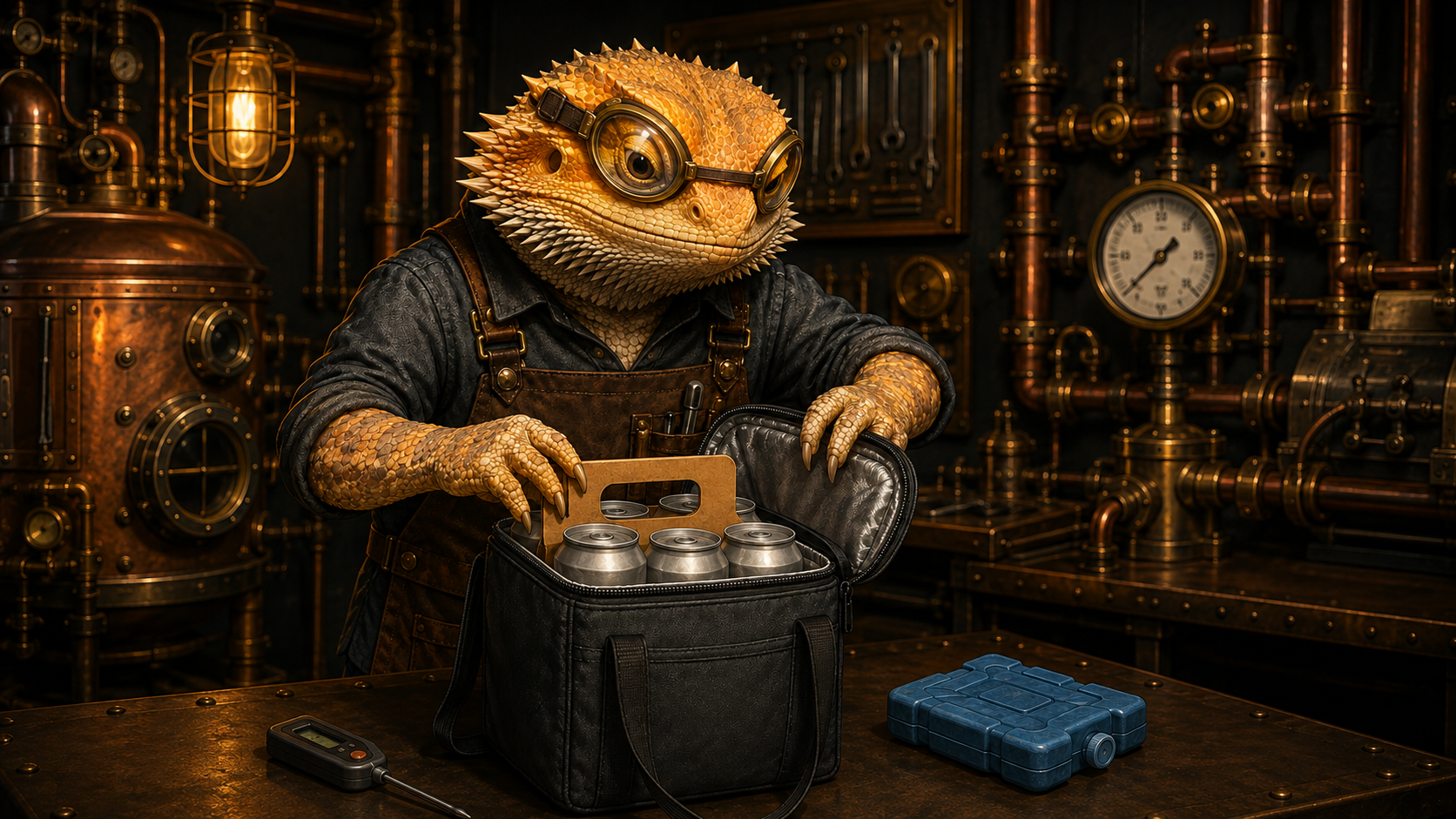
A taproom stop should end with a few good beers getting home in the same condition you chose them. It does not require a rolling cooler, a tactical backpack, or a trunk full of accessories. For most small purchases, the right beer carrier is simply the lightest thing that keeps cans or bottles upright, protected, and reasonably cool until you can refrigerate them.
The useful question is not “What is the best beer carrier?” It is “What will I carry, how far will it travel, and what could damage it?” A four-pack of cans on a direct drive home has different needs from several bottles carried through a warm afternoon, a rideshare, and a hotel room.
This is an adult-oriented guide to handling a purchase safely and responsibly. If drinking is part of the visit, arrange transportation before the first pour. The carrier is for unopened beer, not a workaround for impaired driving or an excuse to turn a simple stop into a larger haul.
Start with the container the brewery uses
The package determines the first layer of protection. Cans are light, opaque, and generally resilient, but they can dent and warm quickly in a hot car. Bottles need more separation and are vulnerable to impact. Crowlers are usually sturdy enough for a short trip but should stay upright when possible, especially if they have just been filled. Growlers need their own plan because their freshness window and filling conditions matter more than the bag around them.
| Purchase | A sensible carrier | What to watch |
|---|---|---|
| One four-pack of cans | Brewery cardboard holder or small tote | Keep it upright; avoid loose items crushing the carton |
| Two to four mixed packs | Structured reusable tote with a flat base | Prevent packs from sliding and cans from denting |
| Individual bottles | Divided bottle bag or padded carrier | Separate glass and protect it from hard edges |
| Fresh crowler or growler | Upright, stable tote with short travel time | Refrigerate promptly; follow the brewery’s freshness guidance |
Use the packaging the brewery provides when it is doing the job. A cardboard four-pack carrier is not an embarrassment; it is often the correct answer for a short, direct trip. Add another carrier only when distance, temperature, glass, or a mixed purchase creates a specific problem.
Choose structure before insulation
People often buy an insulated bag first, then discover that its soft sides let cans roll into each other or bottles meet the hard corner of another item. Start with a stable base and enough shape to keep the purchase upright. Insulation is useful only after the beer is protected from movement.
A simple system has three layers:
- Containment: a carrier sized for the purchase, without enough empty room for packs to slide.
- Separation: dividers for glass or a towel around a mixed load, used to stop impact rather than create a padded mystery bag.
- Temperature control: an insulated tote or small cooler only when heat and travel time justify it.
Do not pack loose ice against paper labels or toss cans into a cooler full of water. If you need cooling, use sealed cold packs or a dry, separated compartment. The goal is not to keep beer at an exact laboratory temperature during a short trip; it is to avoid hours of unnecessary heat and physical abuse.
Match capacity to a normal stop
A carrier that holds twelve bottles may look versatile and spend most of its life empty. Buy for the usual visit, not the imaginary maximum. A compact carrier is easier to carry through a parking lot, fit behind a passenger seat, and store at home.
For a small brewery purchase, good capacity usually means one or two four-packs, or a few individually selected bottles. If you routinely bring home more than that, a small hard-sided cooler may be more stable than an oversized soft tote. But size changes the plan: it takes trunk space, needs cold packs, and invites buying more beer than you meant to transport. The carrier should support a decision you already made, not make a bigger purchase feel inevitable.
The Practical Growler Test for a Same-Day Brewery Visit is useful when the purchase is draft beer in a growler: the package, time, and plan to drink it are part of the decision.
Plan the trip from the taproom to the refrigerator
The route home is part of beer care. Put the carrier on a flat floor behind a seat or in a secured trunk area; do not leave it loose on a passenger seat where a quick stop can turn it into a projectile. Keep it out of direct sun. In warm weather, bring it inside before you unload the rest of the car.
If you have more errands, decide whether the beer should be the last stop. An hour of unavoidable travel is normal. Several warm stops while the purchase sits in a parked car are an avoidable quality problem. Freshness-sensitive beer does not become unsafe because it spent a brief time out of a refrigerator, but repeated heat and time are a poor way to treat something you bought to enjoy.
This is also why a carrier is not a refrigerator. It buys protection and a little time. Once home, refrigerate beer according to the brewery’s guidance, especially hop-forward beers and fresh draft packages. Store bottles upright when their closure or sediment makes that sensible, and do not assume every beer benefits from the same storage rule.
Avoid the common overcorrections
The practical failure modes are ordinary:
- A giant cooler for one four-pack: bulky, awkward, and likely to become a reason to overbuy.
- A soft grocery bag for glass: fine until a bottle meets a car door, curb, or another hard object.
- A bag with no flat bottom: cans stack poorly, cartons bend, and a crowler can tip.
- Loose ice and soggy labels: cooling that creates a different problem.
- Leaving the purchase in a hot vehicle: the most expensive carrier cannot undo hours of heat.
- Treating a fresh fill like a cellar beer: a brewery can tell you more about its intended storage and freshness window than a generic rule can.
The solution is rarely more gear. It is a small carrier you will actually keep in the vehicle or near the door, with a straightforward rule: secure the purchase, go home, and refrigerate it.
How To Choose a Brewery Taproom Flight Without Fatiguing Your Palate covers the equally useful upstream choice: keep the tasting small enough to make a clear purchase decision, and make the transport plan before tasting starts.
Build the smallest useful carrier system
For most readers, a structured reusable tote with a flat base and a small insulated insert is enough. Add bottle dividers only when glass is a regular purchase. Keep a thin reusable cold pack nearby for hot days, and use the brewery’s cardboard holder inside the tote when it fits. That system is inexpensive, easy to store, and adaptable to cans, bottles, and a modest mixed purchase.
The right carrier disappears into the trip. It does not announce that you have become a beer logistics specialist. It lets you make a thoughtful stop, bring a few beers home intact, and enjoy them under the conditions they deserve.