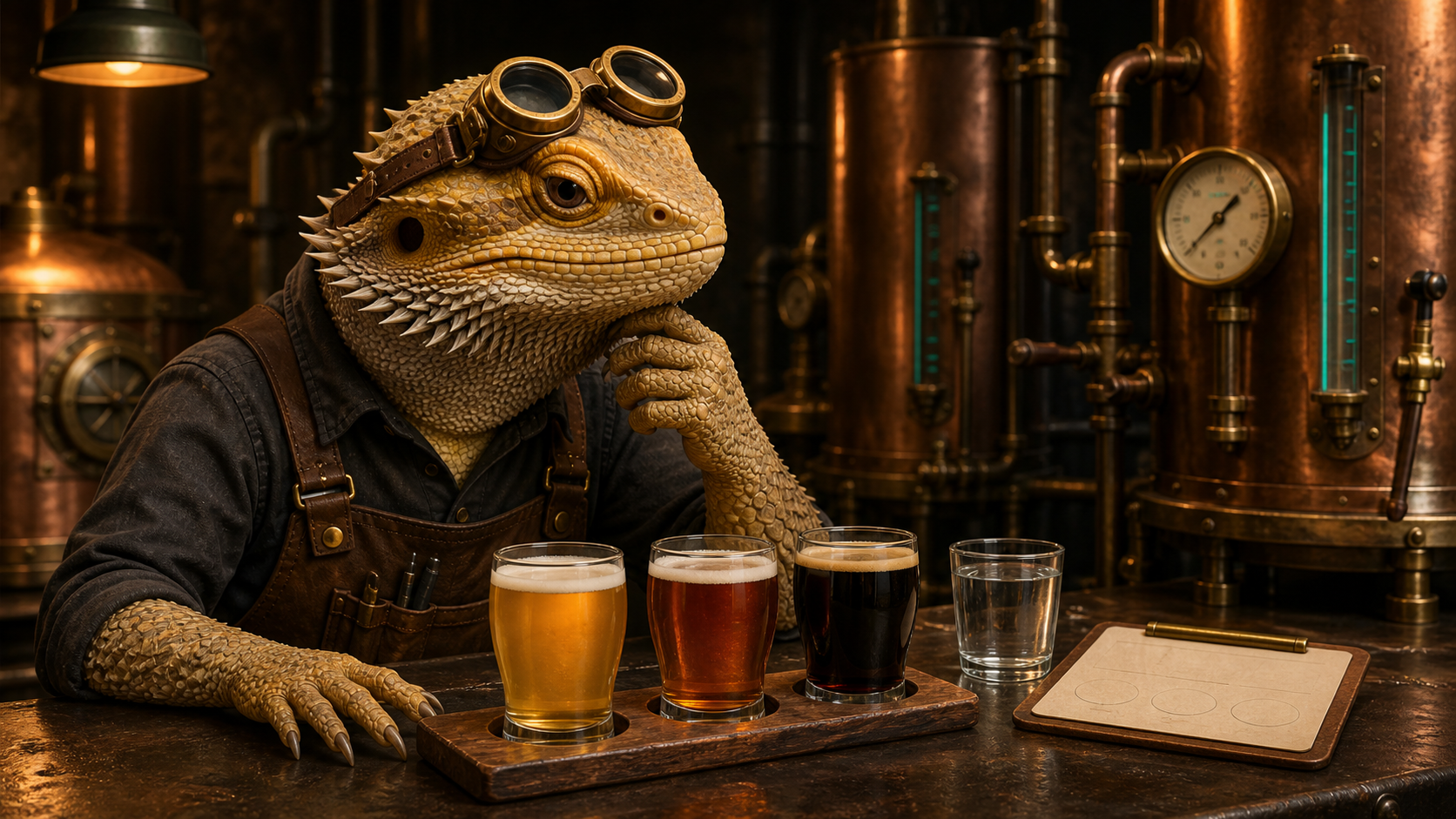
A taproom flight looks like an easy way to “try everything.” That is also how it becomes a row of warming glasses that all begin to taste vaguely bitter, sweet, or alcoholic by the middle of the visit.
The useful purpose of a brewery flight is smaller: answer one question about the beer. How does this brewery's pilsner compare with its pale ale? What does a base stout taste like before the barrel-aged version? Which hop-forward beer actually fits the meal you plan to order? A small flight makes those comparisons possible without turning the visit into a completionist project.
Good taproom judgment is not about finding the “best” beer in a room. It is about making a modest choice, paying attention to it, and leaving enough room for food, water, conversation, and a safe ride home.
Start with one question
The first useful decision happens before the server starts pouring. Pick a comparison that will teach you something specific.
| What you want to learn | Better flight | What to avoid |
|---|---|---|
| A brewery's house style | Its core lager, pale ale, and IPA | A random mix of every novelty tap |
| How ingredients change a beer | Two related beers with one clear difference | Three unrelated strong beers |
| What works with food | A lighter beer, a maltier option, and one hoppy choice | Ordering by the biggest ABV number |
| Whether to bring home a can | One promising beer beside a familiar style | Buying a case before tasting it |
If the list is unfamiliar, ask a direct question: “Which three pours would let me understand how you approach hop-forward beer?” A good taproom can usually point to a coherent sequence. If every answer is a limited release with a large pour, it is fine to order one full beer, drink water, and try another style on a future visit.
A Beerded Engineer’s Guide to Visiting a Brewery is the broader reminder: choose the kind of visit you want before treating a flight as the default order.
Keep the flight modest
Three small pours are often enough. Four can work when they are genuinely small and the comparison is tight. More glasses create two problems: the last beers warm up while you work through the first ones, and your palate becomes less useful precisely when the strongest flavors arrive.
The exact pour size and alcohol content matter more than the number of glasses. A flight of delicate, lower-strength beers is a different commitment from a flight that includes several high-proof stouts, double IPAs, or barleywines. There is no prize for finishing every sample. Share only where the venue permits it, leave a pour that is no longer useful, and do not use a tasting board as a reason to drink past the point where you can make good decisions.
Water belongs on the table from the first pour. Food belongs in the plan when the visit will last more than a short comparison. Those choices do not dilute the experience; they make it possible to notice the later beers without turning fatigue into an accidental tasting note.
Order from delicate to intense
The familiar light-to-dark shortcut is a decent start, but color is not the whole order. A pale double IPA can overwhelm a dark mild. A highly acidic fruit beer can make the next beer seem muted. A barrel-aged stout can leave a long impression that no clean lager will erase.
Use this practical sequence instead:
- Delicate lager, wheat beer, or low-intensity pale ale.
- Malt-forward amber beer, balanced pale ale, or a slightly more aromatic hop beer.
- The strongest, sourest, smokiest, most bitter, or most barrel-forward pour.
Ask the server when a brewery's menu does not fit that pattern. They know which beer will be overwhelmed first. Between pours, take a sip of water and give the glass a moment rather than immediately moving to the next one. If the venue is busy, that small pause also makes the flight feel like a conversation instead of a timed test.
Taste for comparison, not performance
You do not need a theatrical vocabulary to get value from a flight. Notice a few ordinary things:
- Does the first beer feel crisp, soft, dry, or sweet?
- Is the aroma more citrusy, floral, resinous, bready, roasted, or fruit-like?
- Does the second beer make the first one seem lighter, sweeter, or more bitter?
- Which beer would you want with the food on the table?
- Which one would you be happy to order again as a normal full pour?
Write down one or two comparisons, not an elaborate review. “The pilsner was cleaner and drier than the pale ale; the pale ale fit the pretzel better” is a useful memory. It tells you something you can use on the next visit.
How To Choose Beer for a Small Home Tasting Without Turning It Into a Collection uses the same principle at home: a narrow question produces better learning than a larger pile of bottles.
Protect the beer's useful information
Clean glassware, sensible temperature, and a little room for aroma matter more than ornate tasting ritual. If a glass smells of detergent or cooking oil, it has already added a competing ingredient. If a pour has warmed far beyond where it is enjoyable, the observation is no longer a fair comparison with the first one.
That does not mean a taproom needs laboratory conditions. It means the basics should not be working against the beer. How To Clean Beer Glasses So Foam and Aroma Work Properly explains why residue and careless glass handling can change what reaches your nose before the beer ever reaches your palate.
If you find one beer you genuinely like, make the next decision modest too. Buy one can or bottle if the brewery allows it, enjoy it later in an appropriate setting, and decide whether it is worth returning for. Freshness, storage, and travel all matter more than the excitement of a crowded cooler bag. How To Choose Fresh Beer While Traveling Without Chasing Every Release offers a useful way to make that choice.
Decide transportation before the first pour
The flight should fit the transportation plan, not force one after the fact. Choose a designated driver, rideshare, public transit, or walkable lodging before ordering. Do not drive impaired, do not take open containers into a vehicle, and do not let a carefully chosen beer sequence become an excuse for a careless trip home.
That is not a grim addendum to a brewery visit. It is part of what makes the visit relaxed. When transportation, water, and food are handled up front, you can enjoy a few purposeful pours without spending the whole evening negotiating the consequences.
Leave with a clearer preference
The best taproom flight is rarely the biggest. It is the one that answers a small question: which version of a style you prefer, how a brewery handles a particular ingredient, or what makes a beer fit the food and moment in front of you.
Order a few small pours, start with the least intense beer, use water and food, take simple notes, and stop when the comparison has done its job. That is enough to learn something useful and still enjoy the rest of the visit responsibly.
For more practical guidance on beer, whiskey, and drinking well, visit The Beerded Engineer.