
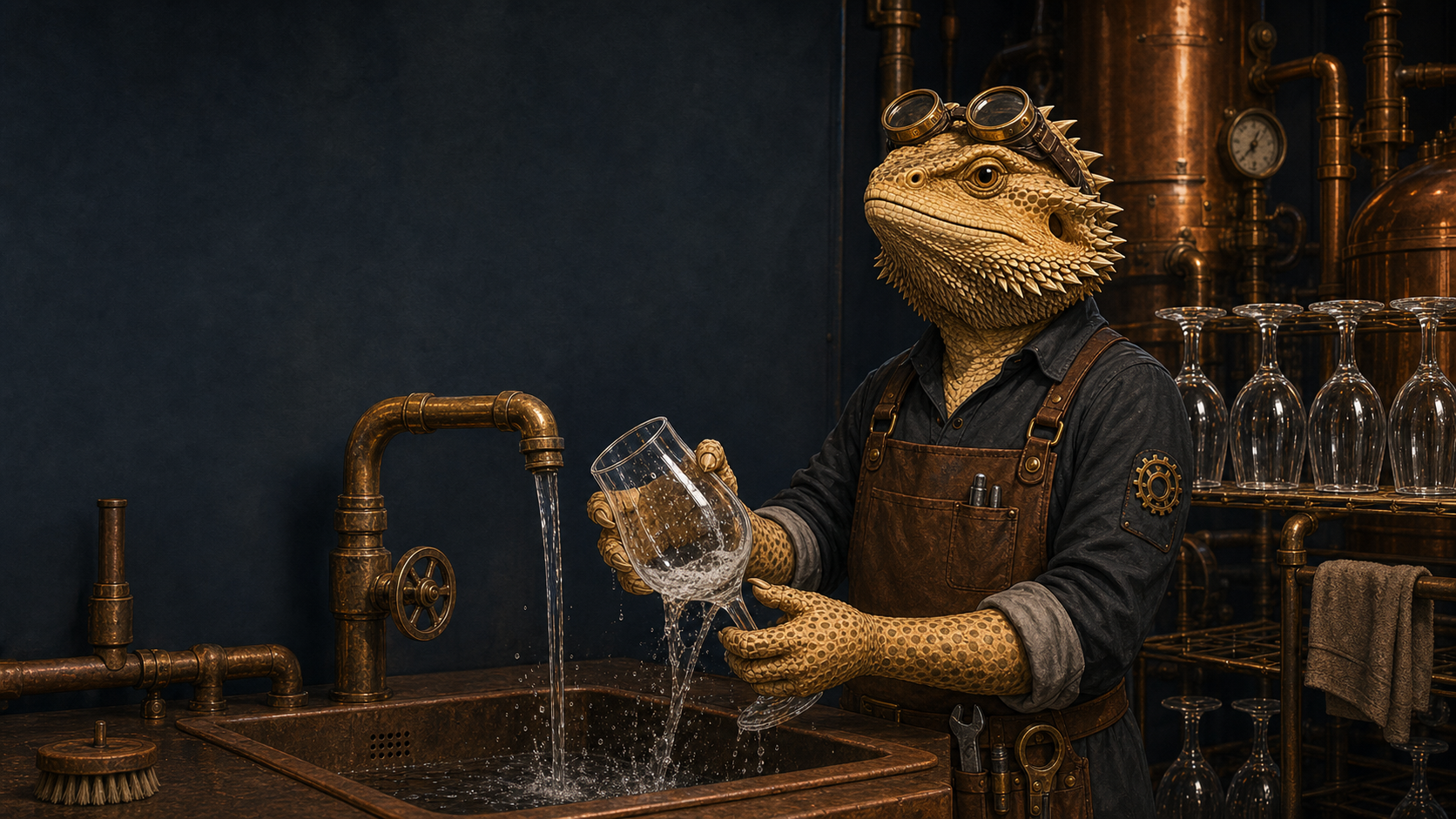
Beer glass cleaning is one of those subjects that can sound needlessly fussy until a clean glass turns a normal pour into a better one. The point is not to recreate a professional bar's sanitation program at home. It is to keep detergent residue, grease, dust, and cooking odors from deciding how a beer smells, tastes, and holds foam.
Foam is not decorative waste. It carries aroma, moderates the first rush of carbonation, and changes how the beer reaches your palate. A glass with invisible residue can cause bubbles to collapse early or cling in patchy, strange patterns. A glass that smells like lemon detergent or dishwasher perfume has already introduced a competing ingredient.
The useful home routine is simple: wash glassware with an unscented, residue-conscious method, rinse thoroughly, let it air dry, store it away from strong odors, and give it a quick cold-water rinse before a careful pour when needed.
What makes a beer glass “clean”
Clean is not the same as visibly empty. A glass can look spotless while carrying oils from food, lip balm, hand lotion, fabric softener, or a rinse aid. Those residues interfere with foam because they disrupt the surface conditions that let bubbles persist. Strong fragrance matters too: your nose notices it before the beer has a chance.
There are a few practical warning signs:
- Foam falls away immediately after a normal pour.
- Bubbles gather in irregular islands on the inside of the glass instead of leaving more even lacing as you drink.
- The glass smells of detergent, cabinet dust, or the dinner you cooked nearby.
- A rinse leaves the interior looking beaded or greasy rather than uniformly wet.
None of these observations is a laboratory certification. They are good reasons to wash the glass again before blaming the beer.
Pick a repeatable washing method
Hand washing is the easiest method to control for a small collection. Use a dedicated soft brush or clean sponge, warm water, and a modest amount of unscented dish soap. Do not use the same greasy scrubber that cleaned a roasting pan. Rinse thoroughly with clean water until there is no slippery feel or fragrance.
A dishwasher can work if it rinses well and does not leave a strong scent or rinse-aid film. The risk is not that dishwashers are forbidden; it is that they share a load with cooking grease, scented products, and containers that collect old food water. If your glasses emerge odor-free and pass a simple rinse check, the dishwasher is a reasonable convenience. If they repeatedly compromise foam, switch the glassware to a separate hand-wash routine.
| Method | Works well when | Watch for |
|---|---|---|
| Hand wash | You have a small set and an unscented soap | Reusing a greasy sponge or rushing the rinse |
| Dishwasher | It rinses cleanly and glasses are odor-free | Scented tabs, rinse aid, and greasy mixed loads |
| Quick pre-pour rinse | The glass is clean but has sat in a cabinet | Treating it as a substitute for washing |
Do not use a towel to polish the inside of a beer glass. It can leave lint, fragrance, or a little fabric-softener residue precisely where you want clean glass. Air drying upside down on a clean rack is the lower-drama answer.
Store glasses like useful equipment
Store glassware upright or upside down on a clean, dry shelf; either choice can work if the rim stays clean and the cabinet does not trap stale moisture. The more important variable is location. Keep glasses away from the stove, dishwasher vent, strongly scented candles, and the cabinet where cooking oils or spices dominate the air.
Before serving, a fast cold-water rinse removes dust and cools the surface a little. Shake off the excess; do not leave a pool of rinse water in the bottom. This is especially useful for a glass that has been on open display, but it does not rescue one that smells like last week's dishwasher cycle.
For a sensible starter collection, The Only Beer Glasses Most People Actually Need keeps the focus on versatile shapes rather than a cabinet full of specialty vessels.
Pouring reveals the result
Cleaning has a visible payoff when you pour. Start with the glass tilted, aim the beer down the side, then straighten it as the level reaches the middle. A controlled head is expected, not a mistake. In a clean glass, the foam should have a chance to form and leave a reasonable trace as the beer is enjoyed.
Do not turn this into a pass/fail test for the brewery, the glass, or your technique. Beer style, carbonation, temperature, and package condition all influence foam. But cleaning removes an avoidable variable. That makes it easier to notice what the beer is actually doing.
The same applies to glass shape. A tulip can focus aroma for an IPA or stronger ale, while a plain pint earns its keep through easy everyday use. One IPA, Four Glasses: Can You Taste the Difference? offers a useful way to test a preference without pretending that one glass creates an objective winner.
Avoid the common home-bar mistakes
- Scented detergent and rinse aid. Pleasant for plates is not neutral for beer.
- A shared greasy sponge. It transfers the very residue you are trying to remove.
- Towel drying the interior. It can add lint, fragrance, and film.
- Using beer glasses for cocktails, smoothies, or cooking prep. The glass can be cleaned afterward, but it needs a deliberate reset.
- Displaying glasses beside a stove. Heat and aroma have a way of becoming part of the next pour.
- Chasing perfect foam as a ritual. A clean glass improves conditions; it cannot override every beer or serving variable.
A five-minute reset for a small collection
When the last glass is empty, rinse it promptly. Wash it before residue dries, rinse it thoroughly, and let it air dry on a clean rack. Once a week, inspect the small set for cloudiness, residual smell, or a glass that has drifted into regular kitchen duty. If it has, give it a more careful wash before putting it back in the beer rotation.
That is enough. Clean glassware is not a luxury hobby or a performance for guests. It is the small bit of care that lets freshness, temperature, carbonation, and aroma do their jobs. Combined with sensible storage in How To Store Beer at Home Without Ruining It, it gives ordinary beer a fair chance to taste like the brewer intended.