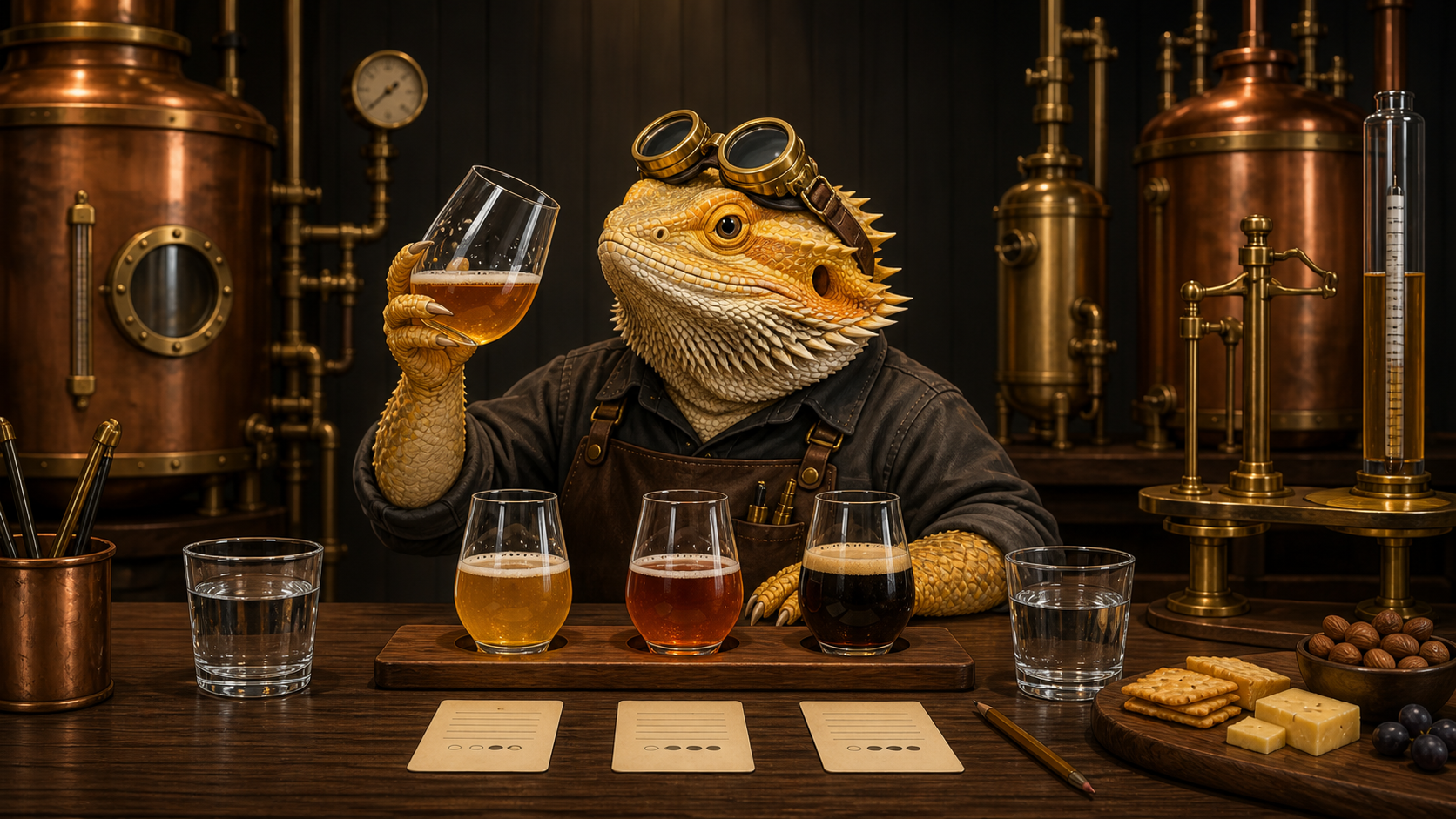
A good home beer tasting is smaller than most people think. You do not need twelve limited releases, matching glassware, a brewery-style flight board, or a spreadsheet that assigns every guest a palate. You need a few beers that make a useful comparison, enough attention to notice what changed, and a serving plan that lets everyone enjoy the evening responsibly.
The common failure mode is buying a collection disguised as an event. A refrigerator fills with expensive bottles, the pours get too large, the comparison gets muddled, and nobody remembers why the third hazy IPA was on the table. A better tasting is intentionally narrow: four beers is plenty, one or two variables change at a time, and there is a clear reason for the order.
This is not a test you can fail. It is a way to turn an ordinary beer night into a more interesting conversation without making it fussy.
Decide what you want to learn before buying beer
Pick one question. That decision does most of the work.
Useful questions for a small home tasting include:
- How does the same style change between two breweries?
- What does a pale ale taste like next to an IPA?
- How does a lager's hop character differ from a pale ale's at a similar strength?
- What changes when one beer is malt-forward and another is hop-forward?
- How does a fresh version compare with a beer that has had more time in the package?
The most revealing flights change one or two dimensions, not everything at once. If you pour a pilsner, an imperial stout, a barrel-aged barleywine, and a fruited sour, you may have several enjoyable beers but no coherent comparison. That is fine for a party; it is not particularly useful as a tasting.
For a first flight, choose a simple progression such as two pale ales and two IPAs, or three lagers from different producers. The point is not to crown a winner. It is to notice the differences in aroma, bitterness, body, sweetness, and finish when the beers have enough shared ground to talk about.
Keep the flight to three or four beers
Three beers can be a complete tasting. Four is usually the practical upper limit for a small group at home. Beyond that, attention and palate fatigue become the main variable.
Choose smaller packages when you can, or invite enough adults that each person can have a modest pour. A tasting pour around two to four ounces is often enough to smell, taste, revisit, and compare. The exact amount depends on alcohol strength and the group, but the principle is durable: the goal is discernment, not consumption.
| Group size | Flight | Pour approach | What to buy |
|---|---|---|---|
| One or two adults | Three beers | Small pours with food and water | Single cans or small bottles if available |
| Three or four adults | Three or four beers | About two to three ounces each per beer | One 12-ounce package per beer is often enough |
| Five or six adults | Four beers | Two-ounce pours, with one optional revisit | More small packages rather than large bottles |
The table is a planning aid, not a reason to push pours upward. If a beer is strong, sweet, intensely bitter, or simply not landing for the group, pour less. Save a sealed package for another occasion instead of treating completion as a duty.
Buy fresh beer that fits the question
Freshness matters most when the beer depends on bright hop aroma, delicate malt, or a crisp finish. Check package dates where a brewery provides them, buy from a shop with sensible cold storage and turnover, and avoid treating a dusty shelf find as a treasure merely because it is unusual.
For a tasting built around IPAs, pale ales, pilsners, or wheat beers, favor recently packaged examples and plan to drink them soon. Strong dark beers and some mixed-fermentation beers can have different aging behavior, but that is a reason to read the brewer's guidance, not a blanket excuse to cellar everything.
The same judgment applies in an unfamiliar shop: package information, storage, and a realistic drinking window matter more than hype.
Buy what you can explain in one sentence. “These are two West Coast IPAs from different breweries” is enough. “These three lagers use different approaches to malt and hopping” gives people something to notice. A shopping cart full of unfamiliar labels does not.
Set a serving order that keeps the subtle beer audible
Serve from lighter to stronger and from lower intensity to higher intensity. This is not a rigid law, but it is a good default because strong sweetness, roast, alcohol warmth, and intense hop bitterness can make a delicate beer seem thinner when it comes afterward.
A sensible order might be:
- Crisp lager or light pale ale.
- Fuller pale ale or moderate IPA.
- More intensely hopped IPA or richer amber beer.
- Porter, stout, or another high-intensity closer if it fits the question.
Within a narrow same-style flight, order by alcohol level and intensity. If you are unsure, read the labels, look at brewery descriptions, and choose the beer you expect to be quietest first. You can always revisit a beer; you cannot completely reset your palate halfway through a very bitter or very sweet pour.
Temperature is part of the serving decision. Beer straight from a very cold refrigerator can hide aroma and flavor, while beer that has warmed too much can seem loose and boozy. Let especially aromatic or malt-focused beers sit briefly after opening, but do not turn warming into a ritual. The useful question is whether the beer has enough aroma and texture to compare, not whether it has reached a magic number.
Use ordinary glasses and a repeatable pour
The best beer glass for a home tasting is usually a clean glass with enough room for foam and aroma. Matching specialty glassware is unnecessary. A set of small tumblers, stemmed glasses, or simple pint-shaped glasses works well when they are clean and reasonably similar in size.
The Only Beer Glasses Most People Actually Need makes the case for a small, useful glass collection rather than a style-by-style cabinet. Pour a modest amount, leave room for a head, and give the beer a moment before judging it. How To Pour Beer at Home Without Overthinking It covers the simple tilt-and-straighten method.
If you are tasting from cans or bottles, label glasses with a small card or keep the packages in serving order. Memory is less reliable than people think once several similar beers are open.
Give people a few prompts, not a scoring sheet
The conversation gets better when the prompts are concrete and low-pressure. Ask guests what they notice, not whether they can identify a prescribed note.
- What did you smell before the first sip?
- Does this one feel drier, sweeter, lighter, or fuller than the previous beer?
- Where does the bitterness show up: early, late, or not much at all?
- Which beer would you want with dinner, and which would you have one of on its own?
- Did the serving order make the differences easier or harder to notice?
Personal preference is valid data. “I prefer the cleaner finish” is more useful than pretending every beer can be reduced to an objective ranking. If the group cannot agree, that often means the comparison was interesting.
Make food, water, and stopping part of the design
Put water on the table before the beer, and have something simple to eat. Bread, crackers, mild cheese, nuts, or a real meal can make a tasting more comfortable without becoming a pairing seminar. Avoid heavily spicy or aggressively flavored food until after the focused comparison if you want the flight to stay legible.
Plan transport and timing before opening anything. Do not build a tasting around driving, operating equipment, or an early obligation. If a person does not drink alcohol, offer something equally intentional—sparkling water, a hop water, tea, or another beverage they enjoy—rather than making abstention feel like opting out of the evening.
That is not a disclaimer stapled onto the fun. It is part of making a small home tasting genuinely hospitable.
The collection is not the point
When the tasting is done, you should have a clearer sense of what you liked and why, not an obligation to keep buying more bottles. Take a photo of the labels or make two notes: the comparison that worked and the beer you would happily buy again. That is enough to guide the next trip to the shop.
The best home tastings are repeatable because they stay modest. Pick a question, choose three or four beers that answer it, pour small servings in a sensible order, and leave room for food, water, and conversation. The result is more enjoyable than a collection project—and much easier to do again.