
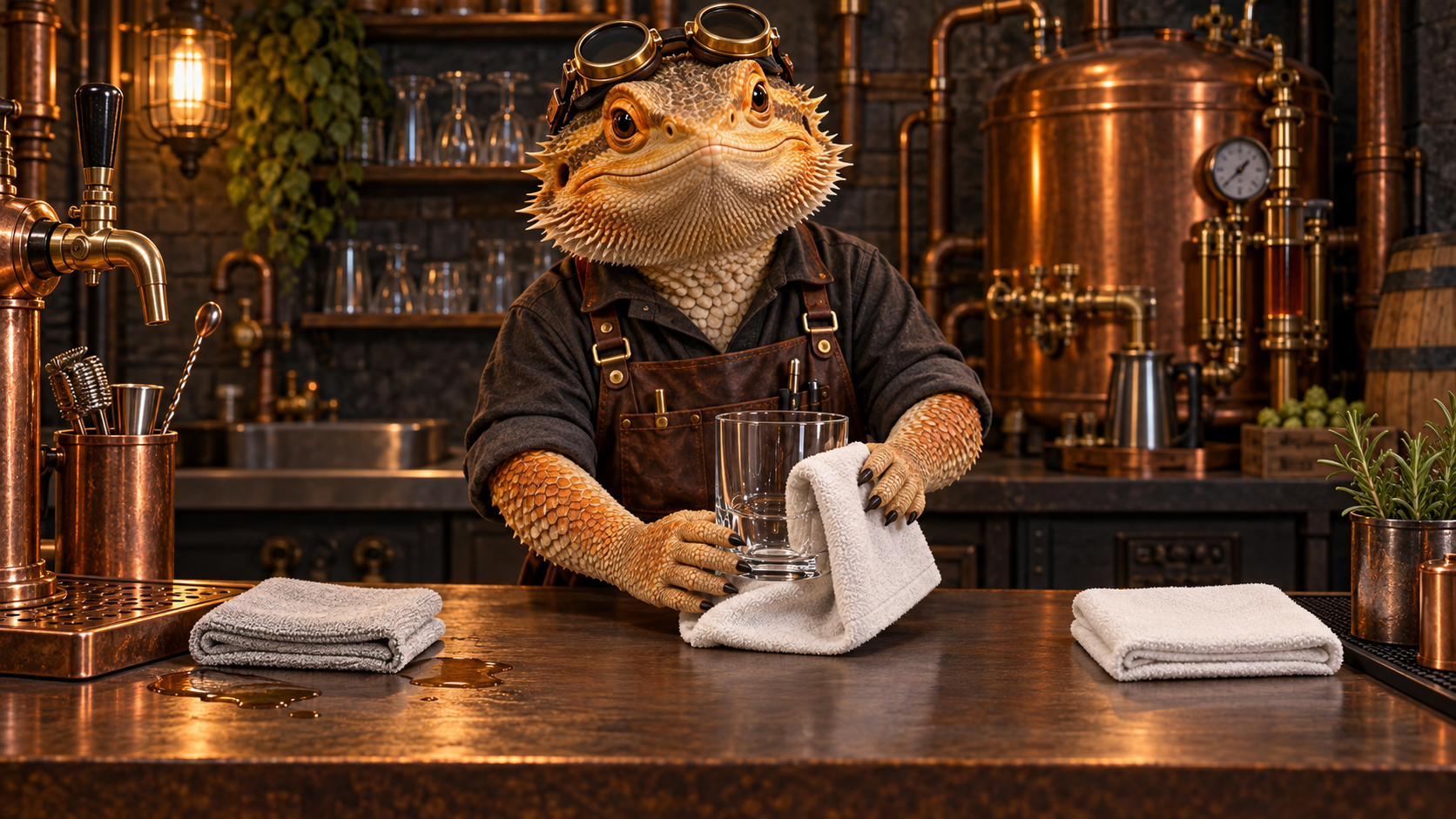
A bar towel is one of the least glamorous pieces of home-bar gear, which makes it easy to accumulate a stack without deciding what any of them should do. One ends up under a wet glass. Another wipes a spill and then gets used to polish a rim. A third lives on the counter until it smells like the room. More fabric has not created a better system.
A useful towel has a job, a clean starting state, and an exit when it gets wet or dirty. For most small home bars, that means a towel for immediate spills, a clean one for handling the outside of glassware or tools, and a surface-cleanup towel that goes to laundry after the session. You may need fewer than three at a quiet pour. The point is to keep the jobs distinct when they happen together.
This is not a case for a special branded cloth. Plain, absorbent, washable towels can do the work. The better buying question is whether they are easy to keep clean, identify by role, and replace before they turn a small mess into a stale one.
Start with the three jobs
A towel can protect a bar surface, keep a hand steady around clean glass, or wipe down a work area. These are related but not interchangeable jobs.
| Job | What the towel should do | When it leaves service |
|---|---|---|
| Spill control | Absorb a small splash before it spreads under equipment or off the counter | After it is wet enough to transfer liquid |
| Glass and tool handling | Help grip the exterior of a clean, dry item without touching its drinking surface | After contact with a spill, food, cleaner, or dirty counter |
| Surface cleanup | Wipe the work surface after service, usually with an appropriate mild cleaner | After the cleanup pass |
A small splash is ordinary. A broken glass, an electrical outlet near liquid, or a large spill needs a different response: stop serving, keep people clear, and clean safely with appropriate tools. Do not drag a towel across shards and then forget where the shards went.
For a countertop with a few bottles and glasses, start with two or three towels you can distinguish by placement or color. Keep the handling towel folded in a clean spot. Put the spill towel where it is reachable. Bring out the cleanup towel at the end. A single towel can cover two jobs only if it is still clean and dry enough for the second one; most of the time that is a bad assumption after a spill.
Choose fabric for laundering, not decoration
An ordinary cotton bar towel is a good default: it absorbs, tolerates frequent washing, and is inexpensive enough to rotate. A tightly woven lint-free cloth can be useful for wiping a clean exterior or a dry tool, but it is usually a poor substitute for an absorbent spill towel. A thick decorative hand towel may feel luxurious and still be awkward under a glass or slow to dry.
Look for a practical size that folds neatly beside the work area. It should be large enough to contain a splash but small enough to wash and dry without fuss. Strong perfume, fabric softener, or a towel stored next to fragrant cleaners is a bad fit around glassware and drinks. Wash new towels before use, keep them free of scented residues, and retire any that shed lint or retain an odor after laundering.
There is no need to recommend a premium product here. Spend money on reliable glassware, a stable work surface, and enough clean towels to rotate. A towel that is too precious to wash after every use is the wrong towel for the job.
Use a handling towel without contaminating the glass
A clean, dry towel can give you a steadier hold on the outside of a glass or the base of a tool, especially when the surface is cold or damp. Keep it away from the rim and the inside of the glass. If the towel touches the drinking surface, or if it has already wiped the counter, set it aside and use a clean one.
The towel does not make a fragile glass safe to lift by its stem or rim. Support the body or base, use both hands when a vessel is heavy, and give yourself enough clear counter space to set it down. A towel wrapped around a glass can hide your grip and make a slick surface harder to judge. If it starts to bunch up, put it down and handle the glass directly.
How To Store Beer Glasses So They Stay Clean, Dry, and Ready covers stable spacing and safe access before service. The towel's job begins when you take a glass out, not when you put it away for the week.
Do not turn a towel into a glass-drying method
A towel on the counter can catch drips from a just-washed glass. That does not mean the glass has dried. Fabric under an inverted glass can hold moisture against the rim and restrict airflow. Rubbing the inside can leave lint or detergent scent exactly where it will meet the drink.
A Small Home Bar Needs a Glass-Drying Plan describes the proper handoff: let water drain, allow air to circulate, and move a fully dry glass to storage. How To Clean Beer Glasses So Foam and Aroma Work Properly handles the washing step. A towel does not replace either process.
It can still have a limited role beside the drying station: catch a splash on the counter and then leave. Do not let it become a damp permanent mat. If a towel stays wet for hours, the bar needs a better place for water to drain, not a larger towel.
Make spill control a short, repeatable routine
A small home bar is easier to use when the response to a spill is automatic:
- Move the glass or bottle to a stable dry spot.
- Blot the liquid so it cannot reach an edge, an outlet, or a vulnerable finish.
- Check under nearby tools, coasters, and bottle bases; a hidden puddle keeps moving.
- Wipe the surface with a cleaner suited to its material if the spill left residue.
- Dry the surface, put the used towel in laundry, and replace it with a clean one.
This matters for sticky mixers and beer as much as whiskey. A wet bottle base can carry a ring to the next surface even after the visible spill is gone. A quick second look saves the later job of unsticking a tool or removing a stain.
Be sensible about materials. Wood, stone, metal, and laminate do not all tolerate the same cleaner or amount of water. Follow the surface maker's care advice for a valuable finish. The towel is an absorbent tool, not a license to scrub aggressively.
Give used towels an exit path
The most important part of the system happens after the pour. A wet towel should not be folded back into a clean stack. Let it dry enough to avoid a damp heap, then launder it according to its care label. Keep used towels away from clean glassware and serving tools. If a towel has touched broken glass, chemicals, or something that cannot be reliably washed out, do not return it to drink service.
A small basket or designated hook is enough if it makes the status obvious. A towel on the left of the counter should not require an archaeological investigation to learn whether it is clean. If you host occasionally, set out fresh towels before guests arrive and remove them afterward. That prevents the week-old "probably clean" towel from becoming part of the setup.
Count the towels you actually use over a few sessions before buying a large pack. If one handles spills and one stays clean for glass handling, that may be sufficient. If several people are making drinks and cleaning at once, a few extras may prevent role confusion. The system should scale with the work, not with the appearance of a professional bar.
A good towel system disappears
The goal is not a perfect counter display. It is a small set of clean tools that helps you catch a spill, handle glass safely, and reset the surface without transferring water, scent, or residue to the next drink.
Give each towel one clear job. Replace it when that job makes it wet or dirty. Let washed glasses air dry and store them separately. The result is a home bar that is easier to use because the humble pieces of fabric finally have a purpose.