
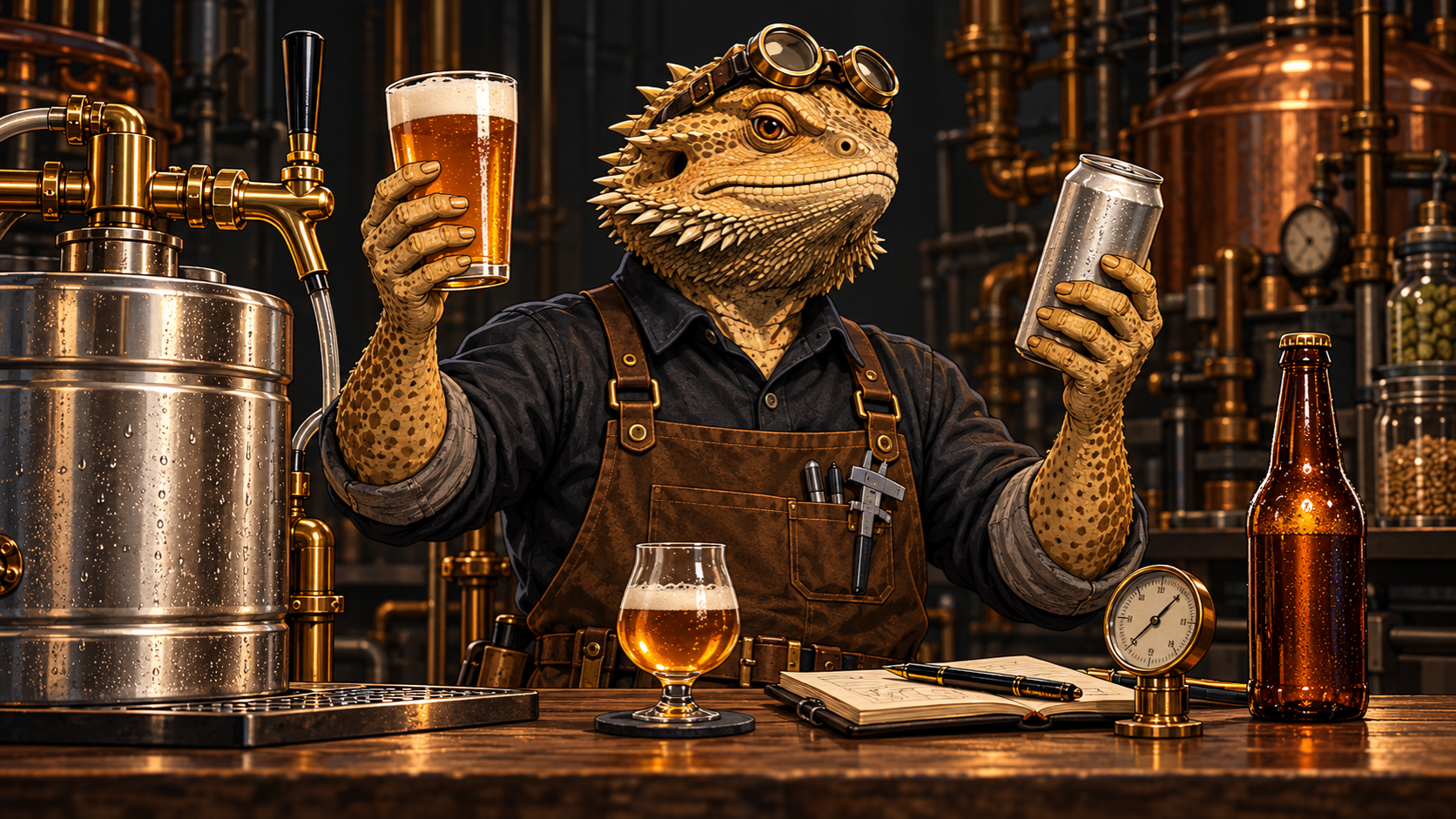
A draft handle makes beer look immediate. Pull the lever, fill the glass, enjoy something that seems one step closer to the brewery. A can in the refrigerator looks less romantic. It also may have a readable packaging date and a much clearer history than the specialty keg that has occupied the far end of the bar for weeks.
Neither format wins automatically. Draft is the better freshness bet when the particular beer moves steadily, stays cold, and travels through a cared-for serving system. Packaged beer can be the better bet when its date and handling are easier to establish than the venue's draft practices.
The useful question is not “Is draft better than cans?” It is “Which version of this beer gives me stronger evidence of the flavor I want?” You can usually make a sensible choice with a couple of questions and a little observation. You cannot audit an entire supply chain from a bar stool, and you do not need to pretend otherwise.
Draft adds a serving system to the comparison
A keg does not send beer directly into your glass by magic. A conventional draft setup uses dispensing gas, a coupler, lines, and a faucet, with cooling appropriate to the system. Each element creates another operational responsibility between the beer and the drinker.
The Brewers Association's Draught Beer Quality Manual connects cold handling, correct dispensing, glassware, and system maintenance to beer quality. Its fourth-edition cleaning recommendations call for line cleaning at least every two weeks, including faucet and coupler care. A keg change alone is not a substitute for cleaning. The manual also distinguishes beverage-gas systems from air-driven hand pumps, which introduce oxygen; do not treat an event's party pump as equivalent to a normal bar system.
For a customer, the implication is to ask about the actual service process. A handsome tower and a huge tap list tell you little about when a line was cleaned. The venue's ability to explain its maintenance routine is more useful than the price of its hardware.
This is a buying decision, not a guide to adjusting pressure or performing chemical cleaning. Let trained staff handle the system. Your job is to choose a pour with reasonable evidence behind it.
Ask about turnover of this beer
A crowded room is encouraging, but the crowd may be ordering cocktails. A popular draft lager may move briskly while a rarely requested seasonal stout sits on its own line. Judge turnover at the beer level rather than assigning one freshness score to the entire establishment.
Try asking, “Does this one move quickly here?” If staff can tell you it is a regular seller or describe the keg's recent arrival, that is more useful than “Everything is fresh.” Follow up with “Do you know when this keg was tapped?” when the beer is an unusual choice or freshness is especially important to its appeal.
Remember that tapping is not production. A keg connected yesterday may already have spent a long time in distribution or storage. If the venue knows a packaging date or brewery freshness guidance, that adds context. A tapped-on date by itself does not reset the beer's age.
Do not invent a universal acceptable number of days on tap. Different beers and producer practices make that a poor shortcut. The practical preference is for a plausible, beer-specific explanation rather than a confident rule applied to everything behind the bar.
Why Beer Tastes Better at the Brewery explores the appeal of drinking closer to the source. Proximity is useful context, but it still does not remove the need for good handling and service.
Cold service is evidence with limits
Ask whether incoming and reserve kegs are kept refrigerated, especially when choosing a beer whose main attraction is fresh hop aroma. The manual emphasizes keeping draft beer cold through handling and service. Cooling just before pouring does not establish the history of the keg.
A cold glass or frosted faucet is not a record of cold storage. You also cannot infer exact keg temperature from condensation on the tower. Those observations tell you something about the moment, not everything about the chain of custody.
The same discipline applies to a can. Sierra Nevada's explanation of beer freshness discusses packaging dates and the effects of heat and sunlight on flavor. Its product-specific storage guidance should not become a universal shelf-life number. A recently dated can kept cold is stronger purchase evidence than a mystery-age can, but the date still cannot disclose every temperature it encountered.
If a venue can describe its cold storage but not its keg age, you have partial evidence. If it knows the age but cannot explain storage, you have a different gap. Treat both honestly; neither requires making an accusation.
Look for a maintenance answer, not a performance
A reasonable question is, “How often are the draft lines cleaned?” A useful answer names a routine, an accountable person or service, and some way the work is recorded. A bartender may need to ask a manager. That is fine. Knowing who can answer is better than improvising certainty.
Avoid turning the interaction into a pop quiz. You are selecting a beer, not inspecting the business. Ask during a quiet moment, and accept that the person taking your order may not maintain the equipment. If the answer is unavailable, choose an option with clearer evidence.
Visible cleanliness is a modest supporting clue. A clean glass, tidy faucet area, and careful handling are reassuring. They cannot prove that hidden lines are clean. Likewise, foam is not a diagnosis: several system and serving conditions can affect a pour. Do not turn a messy first glass into a claim about contamination.
If an aroma or flavor seems wrong, describe what you notice and ask staff about the beer's intended character. A tart beer may be designed that way. An unfamiliar flavor may be stylistic, service-related, or something else. You can decline a replacement or choose another drink without identifying the microbiology responsible.
Give the packaged alternative a fair inspection
When both versions are available, ask to see the sealed package or its date before deciding. Look for a clearly interpreted producer mark, appropriate storage, and an intact container. Do not assume an unlabeled string is a packaging date just because it looks like one.
How To Read Beer Packaging Dates Without Pretending They Are Universal covers that interpretation in detail. Here, the date is one input to comparing the package with the venue's draft option.
| Evidence available | Sensible preference |
|---|---|
| Recent, popular keg; explained cold handling and maintenance | Draft is a credible choice |
| Uncertain specialty keg; recent, cold package with a clear date | Prefer the package |
| Strong evidence for both versions | Choose the serving experience you want |
| Weak evidence for both versions | Choose another beer or another drink |
These are judgment prompts, not laboratory conclusions. They work best when comparing the same beer, or beers that meet the same preference. A beautifully handled stout does not answer a craving for a crisp lager simply because its records are better.
Three situations where the choice changes
A busy neighborhood bar's regular pale ale. Staff say it sells steadily, the current keg arrived recently, reserve kegs stay cold, and a scheduled service maintains the lines. The packaged alternative has an older readable date. Assuming you want that beer's fresh expression, draft is a reasonable preference. You have several useful pieces of evidence pointing in the same direction.
A quiet restaurant's obscure seasonal tap. Nobody can identify when it was connected, and the maintenance answer is vague. The refrigerator holds a recently packaged version of a beer you would equally enjoy. Choose the package. That does not prove the draft beer is bad; it means the package asks you to make fewer unsupported assumptions.
A brewery offering both formats from a recent batch. Staff can explain the beer, both options are kept appropriately, and the draft service is cared for. Freshness may not decide the purchase. Serving size, price, preference, and whether you want beer now or later can reasonably determine the answer.
All three examples are hypothetical. Their purpose is to show how new evidence changes a choice, not to establish a ranking of venue types. A restaurant can maintain excellent draft service. A brewery can have an unpopular line. The individual system matters.
Keep the decision small
A practical sequence takes less effort than collecting tasting jargon:
- Pick the kind of beer and serving size you actually want.
- Ask whether that draft beer moves steadily and what staff know about its age.
- Check the explanation of cold handling and regular system care.
- Compare the package's readable date and storage when a suitable alternative exists.
- Choose the option with stronger evidence, or move on if neither is convincing.
Do not buy extra rounds to resolve uncertainty. If you want to compare formats, a small serving or a shared comparison within your normal plans is enough; the experiment does not require finishing unwanted beer. How To Take Useful Home Beer Tasting Notes Without Writing a Review offers a way to record what you notice without making a single observation into universal proof.
Draft beer earns its freshness advantage through turnover and competent handling, not through the presence of a tap handle. Give a well-run draft system its due. Give a clear, cold, recently packaged alternative the same fair hearing. The best purchase is the beer whose story holds together well enough for the glass you want today.