
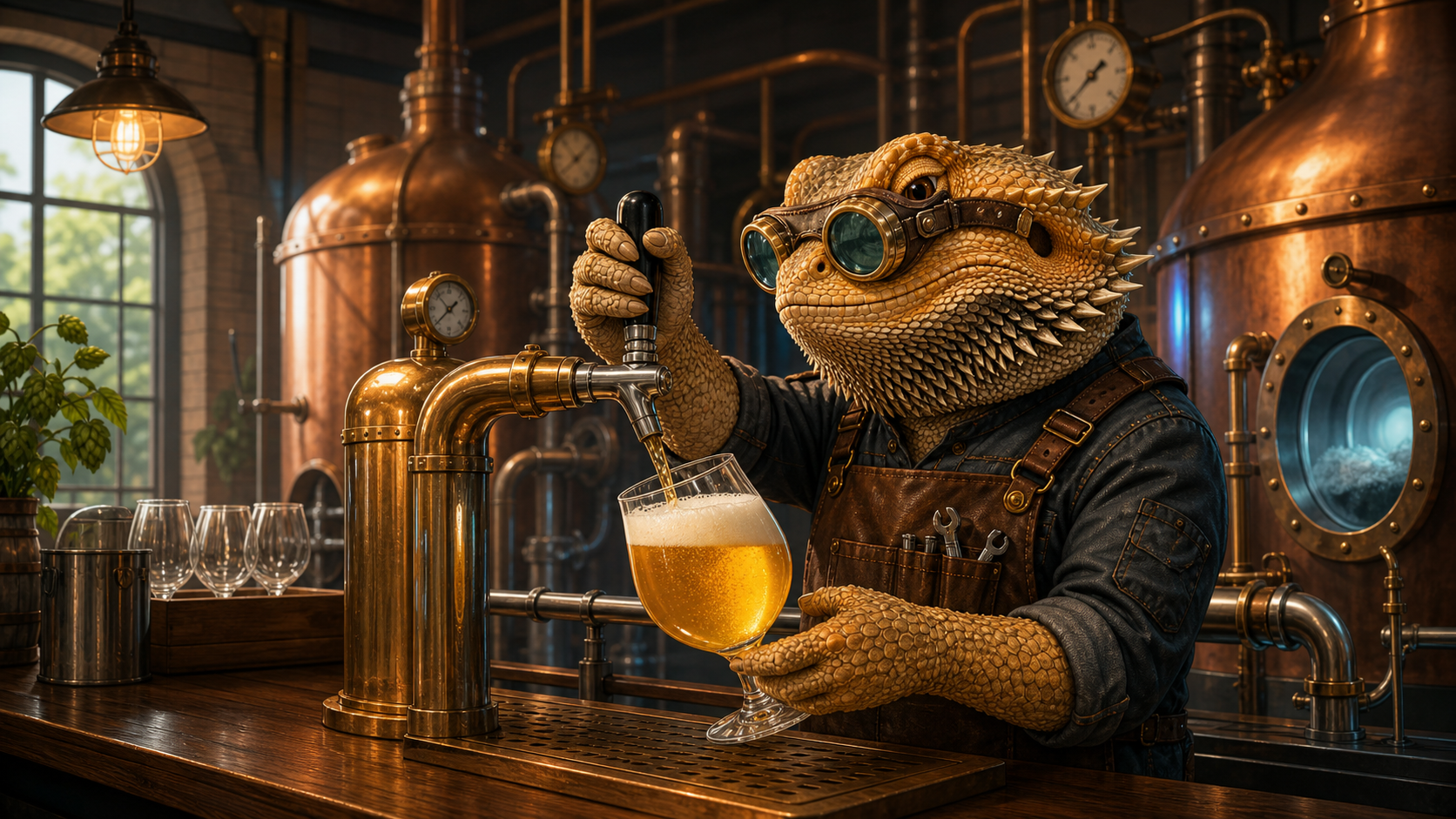
There is a familiar brewery experience: you try a beer at the source, then buy a package to take home, and the second pour feels flatter, rougher, or simply less alive. Sometimes that difference is real. Sometimes the setting is doing some of the work. Usually it is a little of both.
Beer can taste better at the brewery because the path from tank to glass is shorter and better controlled. Freshness, draft-line care, serving temperature, carbonation, a clean glass, and staff who know the beer all matter. The room can matter too—food, friends, and a good patio are not sensory contaminants—but atmosphere does not rescue an oxidized beer or a dirty draft system.
The useful lesson is not that brewery beer is automatically superior. It is that beer is a perishable, carbonated product whose presentation is part of the experience. Once you understand the variables, you can order more intelligently at a brewery and get much closer to that good pour at home.
Freshness is especially important for hop-forward beer
Some beer styles tolerate time gracefully. A strong, malt-forward beer may change slowly and interestingly in the right storage conditions. A dry-hopped IPA is a different kind of product: its most vivid hop aroma compounds are fragile, and oxygen, heat, and time steadily rearrange the experience.
At a brewery, a popular pale ale or IPA may have moved from fermentation to draft line quickly. That does not make it objectively better than every packaged beer, but it reduces opportunities for warm storage, slow distribution, and an unknown retail shelf. The brewer also knows the intended release window and can take a beer off the line when it is no longer presenting well.
Freshness does not mean "brewed yesterday" in every case. It means the beer is within a sensible window for its style and has been stored responsibly. Ask for a packaged date when buying hop-forward beer. For draft, a brewery with a fast-moving tap list is a reasonable positive signal, but it is not proof by itself.
The draft system can preserve—or ruin—the pour
Draft beer travels through a system, not directly from a bright tank into your glass. Gas pressure, line length, temperature, faucet condition, and cleaning all influence the result. A well-run system keeps beer cold, carbonated at the intended level, and free from residues that create stale, buttery, sour, or vaguely "old bar" impressions.
That is why a brewery often has an advantage: its own beer is the central business, its staff know the target pour, and a short, busy system has fewer mysterious handoffs. A brewery can still have a neglected line, and a serious beer bar can have an immaculate one. The address is not the mechanism. The system is.
There are a few useful visual clues without turning a casual pint into an inspection:
- The beer should arrive at an appropriate temperature for its style, not near-freezing by default.
- Foam should look like a deliberate part of the pour, not an accident the server fought to eliminate.
- The glass should smell neutral before the beer arrives.
- A familiar beer that suddenly tastes papery, vinegary, buttery, or strangely dull is worth sending back politely.
The goal is not to hunt faults. It is to recognize when a serving problem is a more likely explanation than "I guess I do not like this beer anymore."
Temperature changes what you notice
Cold suppresses aroma and can mute bitterness, sweetness, and malt detail. Warmer beer releases more aroma but can become heavy, alcoholic, or flabby if it is taken too far. A brewery has an opportunity to serve each beer near the temperature where it makes sense, rather than storing every package in the same very cold refrigerator.
A crisp pilsner can be refreshing colder than a strong stout. An aromatic IPA needs enough warmth for hops to show up. A complex dark beer often becomes more expressive as it rests in the glass. None of these are rigid laws; they are a reason not to assume that "colder" equals "better."
If a beer changes as it warms over fifteen minutes, that is often useful information rather than a defect. Take a small first sip, then return to it after conversation. The middle of the pour may be the most balanced moment.
Glass cleanliness is a quiet performance feature
A clean glass supports foam and lets aroma reach you. Oil, detergent residue, lip balm, and kitchen grease interfere with head retention and can add a stale smell. The difference is not decorative. Foam is part of how beer releases aroma and feels on the palate.
At a good brewery, glassware is usually cleaned for the job and rinsed thoroughly. At home, a glass that came out of a dishwasher smelling like lemon detergent is not ready for a careful pour. Hand-wash or use an unscented process, rinse well, and store glassware away from cooking odors. That small bit of care is a practical workflow, not decorative fussiness.
The glass shape can help as well. A tulip concentrates aroma for a hoppy or strong beer; a sturdy pint works well for casual lager and pale ale service. The point is not collecting a proprietary vessel for every style. The Only Beer Glasses Most People Actually Need explains the small set that covers most needs.
Carbonation and the pour affect balance
Carbonation carries aroma, lifts bitterness, and changes texture. Too little can make a beer feel slack and sweet; too much can make it sharp and fill you up before the flavor has room to develop. Draft systems are set up to hold a target carbonation level, and a practiced pour builds a proper head without turning half the glass into foam.
That is one reason a fresh brewery pour can feel composed. It is not merely colder beer in a prettier room. It may have the intended carbonation, the intended glass, and a person who pours it all day. At home, start with a clean glass, tilt it, then straighten as the beer reaches the middle. A completely foam-free pour is usually not the technical victory it appears to be.
Atmosphere is real, but it is not a magic ingredient
Context changes perception. A warm room full of grain aromas, a view of the tanks, good food, a relaxed conversation, and the small anticipation of choosing a tap all shape attention. That is part of why visiting a brewery is enjoyable, and there is no need to pretend otherwise.
But context should not make the judgment impossible. If a beer only works when you are standing under string lights, the package is not necessarily bad; it may simply be better suited to that occasion. If a beer works in a clean glass at home on a quiet Tuesday, it has earned a different kind of respect.
The honest answer is that both things can be true: the brewery can offer better serving conditions, and the setting can make you more receptive to what is already in the glass.
Bring the useful parts home
You cannot recreate the brewery patio, but you can reproduce most of the controllable variables:
- Buy fresh beer from a retailer with good turnover, especially for hop-forward styles.
- Keep beer cold and dark; do not leave it in a hot car or sunny room.
- Use clean, odor-free glassware and pour with an intentional head.
- Do not serve every beer at the coldest possible temperature.
- Share strong or unusual bottles in smaller pours and notice how they change.
When a brewery pour is exceptional, try to name why. Is it the hop aroma, softness of the carbonation, balance at that temperature, or simply the cleanliness of the glass? The answer gives you a better way to shop and serve than the vague conclusion that beer tastes better only when someone else pours it.
A brewery can offer the shortest, most carefully managed route from fermentation to glass. That is a real advantage. It is not a guarantee, and it is not a secret ingredient. Good beer tastes its best when freshness, storage, draft care, temperature, carbonation, and glassware all point in the same direction—and those are systems a thoughtful home setup can improve too.