
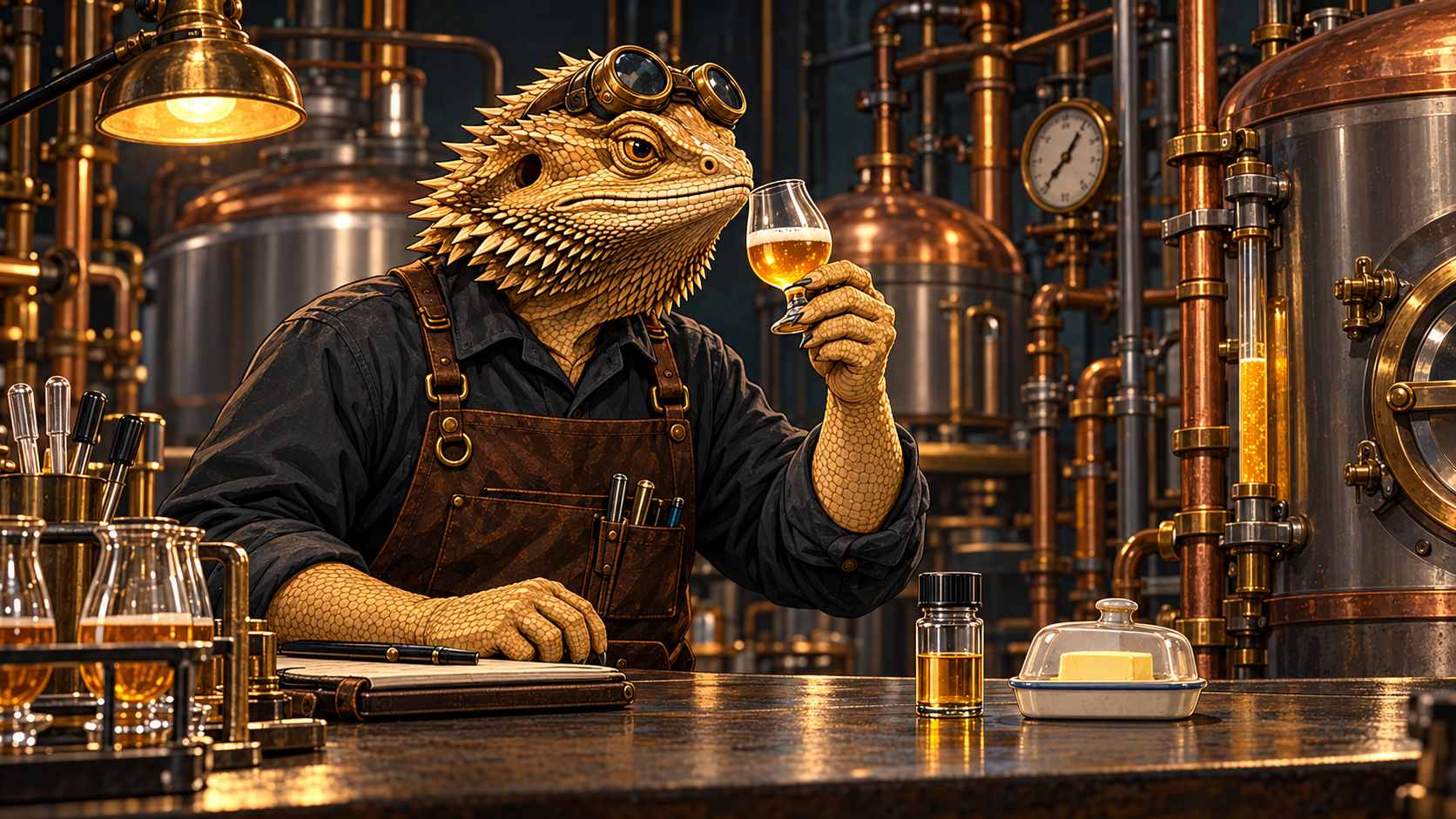
You lift a beer and get buttered popcorn before malt or hops. That impression can be faint and surprisingly pleasant in one pour, or so strong that it makes another beer seem like it came with a side of movie-theater topping. The word “buttery” describes a sensory clue. It does not, by itself, tell you whether the beer was made badly or what exactly happened.
The usual compound behind that impression is diacetyl. Brewing yeast produces a precursor during fermentation, and the finished beer can retain diacetyl if the process does not reduce it enough for the beer's intended profile. There are other possible sources of buttery or related impressions, especially in draft service. The useful move is to recognize the note, consider the style and source, and avoid diagnosing the brewery from one sip.
What diacetyl smells and feels like
The Brewers Association's diacetyl fact sheet describes melted butter, buttered popcorn, margarine, and butterscotch aromas. Some tasters also notice a coating or slick impression at higher levels. The association places diacetyl among vicinal diketones, a family of related fermentation compounds.
Those descriptions are reference points, not a demand that every person perceive the same beer identically. A hint of butterscotch can be hard to separate from caramel-like malt notes, especially when the beer is warm, sweet, or strongly flavored. A very strong buttery aroma is easier to name but still does not reveal its cause on its own.
Notice where the impression appears. Is it present in aroma before a sip? Does it persist after you swallow? Is the mouthfeel unusually slick? Does it drown out the beer's expected malt, hop, or fermentation character? These observations are more useful than announcing “diacetyl” because a flavor wheel supplied a matching word.
If you are comparing two pours, use similar clean glasses and serving temperatures. A dirty glass or a warmer sample can change what you notice. Do not add butter, heat a purchased beer, or perform a brewery-style forced test at home to prove a hunch. A normal sensory comparison is enough for a drinker's decision.
Where it comes from during fermentation
Yeast activity naturally creates a precursor called alpha-acetolactate as part of amino-acid production. That precursor can move into beer and turn into diacetyl. Healthy, active yeast can then take diacetyl back up and reduce it to compounds with much less sensory impact.
The Brewers Association explanation makes the important point: production and reduction are both part of normal fermentation. The existence of a diacetyl stage is not evidence of a failed batch. The finished concentration and the beer's intended character are what matter.
Brewers manage this through yeast health, fermentation progress, temperature, and enough time for reduction before packaging or further processing. The exact schedule depends on the beer and the brewery's process. A consumer cannot infer the yeast strain, fermentation temperature, or conditioning schedule from the word “buttery” in a tasting note.
This is also why “more aging will fix it” is not a safe buying assumption. The brewery controls fermentation and release. Once the beer is in your refrigerator, you do not know whether the relevant yeast activity remains, whether the package has other quality problems, or whether waiting will improve the beer you bought.
A style can allow a little without asking for a lot
Beer styles are useful context, but they are not a universal permission slip for strong butter flavor. The 2026 Brewers Association style guidelines allow very low or nearly undetectable diacetyl in some Czech-style pale and amber lagers. Many other style descriptions say it should not be perceived.
That is a narrow distinction. “Allowed at a very low level” does not mean every Czech lager should taste like buttered toast, and it does not require you to enjoy that note. A producer may also target a cleaner version than a competition guideline permits.
Judge the specific beer against what its brewer presents and what the glass delivers. Does the faint note support a malt-forward impression, or does it dominate everything else? If a strongly buttery taste appears in a beer that is normally crisp and clean, you have a good reason to ask about the pour or choose something else. You do not need to win a style argument to decide what tastes good to you.
When the serving system may be involved
A buttery draft pour does not always point back to fermentation at the brewery. The Brewers Association Draught Beer Quality Manual lists diacetyl among off-flavors associated with contaminated draft systems. That makes a draft-versus-package comparison informative when both versions of the same beer are available and fresh.
If one draft pour tastes conspicuously buttery while a sound packaged version does not, the serving path deserves scrutiny. That observation is evidence, not a complete diagnosis: batches, dates, storage, and serving temperature may also differ. Politely tell the venue what you noticed and ask for another option. Do not assume the bartender can solve a line-quality problem on the spot.
Likewise, two neighboring taps sharing a buttery character could raise a service question, but it does not prove a specific sanitation failure. A brewer or operator has tools and records a customer does not. Your role as a drinker is to make a sensible choice and give clear feedback, not reverse-engineer the cellar from the bar stool.
When Is Draft Beer the Better Freshness Bet? gives a broader way to compare a draft option with a sealed package. This article stays with one flavor clue.
Butter, rancid butter, and other look-alikes
Language gets loose around off-flavors. The Brewers Association's off-flavor series distinguishes diacetyl's melted-butter or popcorn character from butyric acid's harsher rancid-butter impression. Butterscotch-like malt sweetness can also be confused with a light diacetyl note by a casual taster.
You do not need to identify a molecule to reject a beer that tastes wrong. Describe what you perceive without overstating certainty: “This pour has a strong buttery aroma and a slick finish” is more actionable than “Your fermentation was defective.” The first is an observation someone can compare with another sample. The second is a production diagnosis you cannot establish from the glass.
The same restraint helps with neighboring topics. What Makes a Beer Light-Struck? explains a specific light-driven skunky aroma. What Bottle Conditioning Changes in a Beer explains intentional fermentation in the package and yeast sediment. Neither process is shorthand for a buttery beer.
A practical way to judge the pour
When a beer tastes buttery, take a short sequence rather than jumping to a verdict:
- Name the impression. Butter, popcorn, butterscotch, slickness, or something harsher?
- Check the beer. What style and flavor profile does the producer describe? Is the note subtle or dominant?
- Check the format. Is it draft or sealed? Do you have a sound comparison from another package or pour?
- Check the condition. Is the package intact and within the producer's guidance? Was the draft service otherwise convincing?
- Choose the next action. Enjoy a balanced beer if you like it; ask for a replacement or switch styles if the flavor distracts; give the venue a specific observation when appropriate.
The point is not to excuse every flaw as “traditional” or call every trace of diacetyl a disaster. It is to separate a recognizable sensory note from its possible causes and the beer's intended result. A good beer gives you enough else to talk about after you put down the popcorn metaphor.