
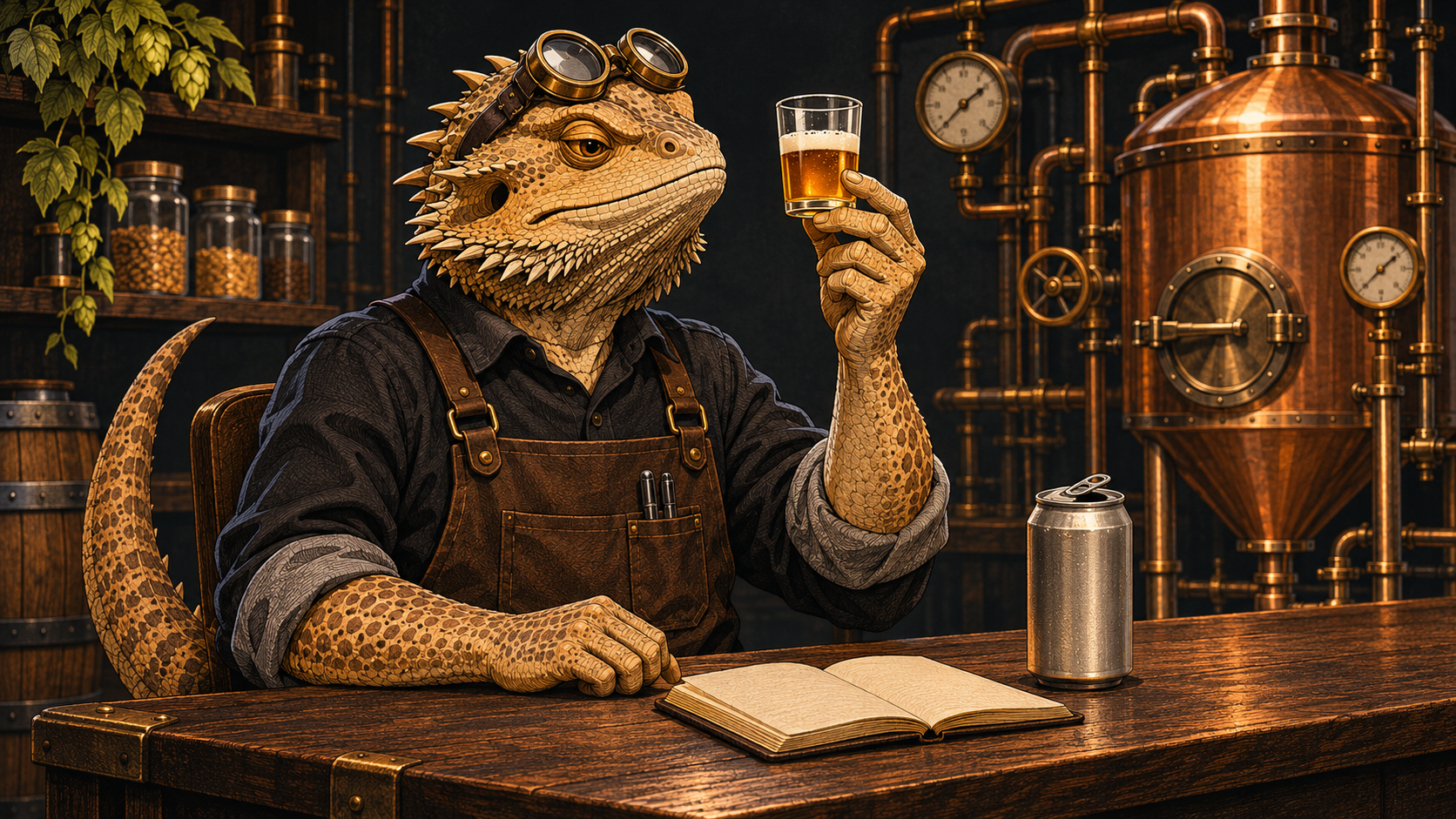
A beer that reminds you of coins gives you a sensory observation. It does not give you a metal analysis, a picture of the brewery's equipment, or proof that its can leaked flavor into the liquid.
Metallic character has several plausible explanations. Some involve metal exposure during production. Others involve changes in ingredients or beer over time. Your serving context also matters when describing what you noticed. The practical task is to separate those possibilities from the evidence available in one glass.
You can decide that you do not enjoy a beer without solving its chemistry. A clear description and a package code are usually more useful to the producer than a confident accusation about the can.
What does metallic beer character mean?
“Metallic” is a family of sensory descriptions rather than a single measured property. A drinker might reach for coin-like, iron-like, inky, or blood-like language. Use whichever description actually fits your impression; you do not need to borrow the most dramatic term from a flavor chart.
Notice where the impression appears:
- Is it in the aroma before a sip?
- Does it become apparent in the flavor or aftertaste?
- Are you describing flavor, or a drying sensation in the mouth?
- Is it obvious, faint, intermittent, or hard to describe?
Those distinctions make a report more precise. They do not identify a compound. In particular, bitterness, sourness, astringency, and metallic character are different descriptions, even if an unfamiliar beer makes them difficult to separate.
The IBU and perceived-bitterness guide explains why a label measurement is not a complete prediction of the experience. The same discipline applies here: a sensory word is useful, but it is not a laboratory number.
Brewing materials and water are possible sources
The BJCP troubleshooting guide's metallic entry identifies metal leaching into brewing water, mash, or wort as a possible cause, naming iron, copper, and nickel. It also identifies lipid oxidation associated with poorly stored malt or beer aging as another possible route to metallic character. Its discussion of stainless steel emphasizes the importance of a properly passivated surface.
These are brewing explanations, not a diagnosis of the beer in your hand. They also show why “the brewery uses metal equipment” is an unhelpful accusation: the material, surface condition, and contact conditions matter. The presence of stainless steel equipment alone does not establish a fault.
From a customer's perspective, process records and appropriate analysis are missing. You do not know the water composition, ingredient history, equipment condition, or package handling just because an aftertaste reminds you of pennies.
A producer investigating repeated reports can connect those observations with its own records. Your role is to preserve useful information rather than reverse-engineer the entire production process from a sip.
A metal can does not automatically mean metallic beer
The tempting explanation is right there in your hand: aluminum package, metallic flavor, case closed. That skips how beverage cans are made.
Coating manufacturer AkzoNobel's internal beverage-can liner information describes protective coatings for beverage cans, including applications for beer. These liners are intended to protect against metal exposure and corrosion. A lined beverage can is not designed as a container of bare aluminum directly exposed to the drink.
That manufacturing evidence rejects the simple assumption that every canned beer must pick up a metallic taste from its container. It does not prove the condition of an individual package, rule out a packaging problem, or establish the cause of your observation.
Nor does a bottle automatically settle the question. A bottled beer still has a production history, and packaging format does not erase everything that happened before filling. Comparing a canned beer with a different bottled beer changes far more than the container.
If you describe a canned pour to the brewery, state that it came from a can. Do not turn the packaging detail into an established failure mechanism. “This can's beer tasted coin-like to me” is an observation; “your liner failed” requires different evidence.
Check the serving context without staging a diagnosis
If an otherwise ordinary beer seems unexpected, note how it was served. A small pour into a clean, odor-free glass can give you a clearer description than drinking at the package opening. It is a serving choice, not a test that certifies the can or identifies its coating condition.
The beer-glass cleaning guide covers a sensible baseline. Avoid scented detergent residue, a glass with a strong cabinet odor, or a tasting space dominated by cooking smells when you are trying to describe a subtle impression.
Record whether the impression was noticed at the package opening, after pouring, or both. Changing the vessel also changes the sensory context, so a difference does not isolate one cause. You do not need to keep tasting until the results line up with a theory.
For a draft beer, identify the venue and tap selection. A metallic impression alone cannot tell you whether the beer arrived that way or whether some aspect of service contributed. Tell the server what seems unusual and let the venue investigate through its normal quality process.
Keep observation, possibility, and conclusion separate
A short table can prevent a surprising amount of overreach:
| What you noticed | Useful information to preserve | What it does not establish |
|---|---|---|
| Coin-like flavor in beer from a can | Beer name, lot code, opening date, package condition | That aluminum or the liner caused it |
| Similar unexpected character in a draft pour | Beer, venue, approximate serving time | A specific line, fitting, or cleaning failure |
| Metallic impression in an older package | Exact date markings and known storage history | A universal age limit or an oxidation diagnosis |
| Different impressions at the opening and in a glass | Serving order, glass condition, your own description | An isolated packaging mechanism |
The table describes ways to communicate an observation. It is not a decision tree that ends in a chemical answer.
Package age deserves particular restraint. Beer date markings differ by producer. Copy the code as printed, and distinguish what the label says from your interpretation of it. A date does not reveal the complete temperature history of the package.
Send a report someone can investigate
A useful quality report can be brief. Include the details the producer would otherwise need to ask for:
- Identify the product. Brewery, beer name, package format, and size.
- Preserve the code. Photograph the lot or date marking exactly as printed.
- Describe the event. Where and when you bought it, when you opened it, and relevant storage you actually know about.
- Describe the impression. Your words, whether it appeared in aroma or flavor, and whether you poured into a glass.
- Ask for the next step. Whether the character fits the intended profile and what additional information would help.
For example: “I opened this beer today and noticed an unexpected coin-like aftertaste after pouring it into a clean glass. The package shows this lot code. I bought it at this store last week and kept it refrigerated after purchase. Is that within the intended profile, and would you like photos or other details?”
That is a hypothetical message template, not a report of a tasting I conducted. Replace its details with what actually happened. If you do not know the storage history before purchase, say so.
A venue may offer a different pour. A brewery may ask for additional package information. Follow its instructions rather than shipping an opened sample or improvising a storage protocol for analysis.
Do not try to fix an unknown commercial beer
Metallic character is not an invitation to add ingredients, put objects into the glass, or warm and age the package until the flavor changes. Consumer improvisation does not establish the cause and can make the original observation harder to interpret.
Likewise, a disappointing flavor is not a reason to finish the beer as an investigation. Keep samples modest, stay within your existing limits, and do not combine drinking with driving or other impaired activity. There is no obligation to take another sip to make a report credible.
Keep quality and safety conclusions separate. Neither an unpleasant metallic impression nor an agreeable taste certifies what is in the package. If the package is damaged, leaking, or otherwise suspect, stop using it and contact the seller or producer rather than tasting it to decide whether it is acceptable.
Learn the clue without overclaiming the cause
The green-apple flavor explainer makes a similar distinction for another sensory family. Learning a mechanism helps you ask better questions. It does not turn every familiar descriptor into proof of a production error.
For metallic beer character, the practical sequence is straightforward: describe the impression, record the context, preserve the package information, and choose whether to request a replacement or contact the producer. Let the strength of the conclusion match the strength of the evidence. The most useful thing you can send a brewery is often a clear observation, not a theory with an exclamation mark.