A snack can make a small beer tasting more comfortable. It can also make the comparison much harder to read. Garlic, chili, barbecue sauce, intense smoke, very sweet dessert, and an aggressively salty handful of chips all announce themselves loudly enough to become the main event.
That is not a complaint about those foods. They may be excellent with beer. They belong in a food-pairing meal, not in the narrow interval where you are trying to tell whether two beers differ in aroma, bitterness, body, or finish.
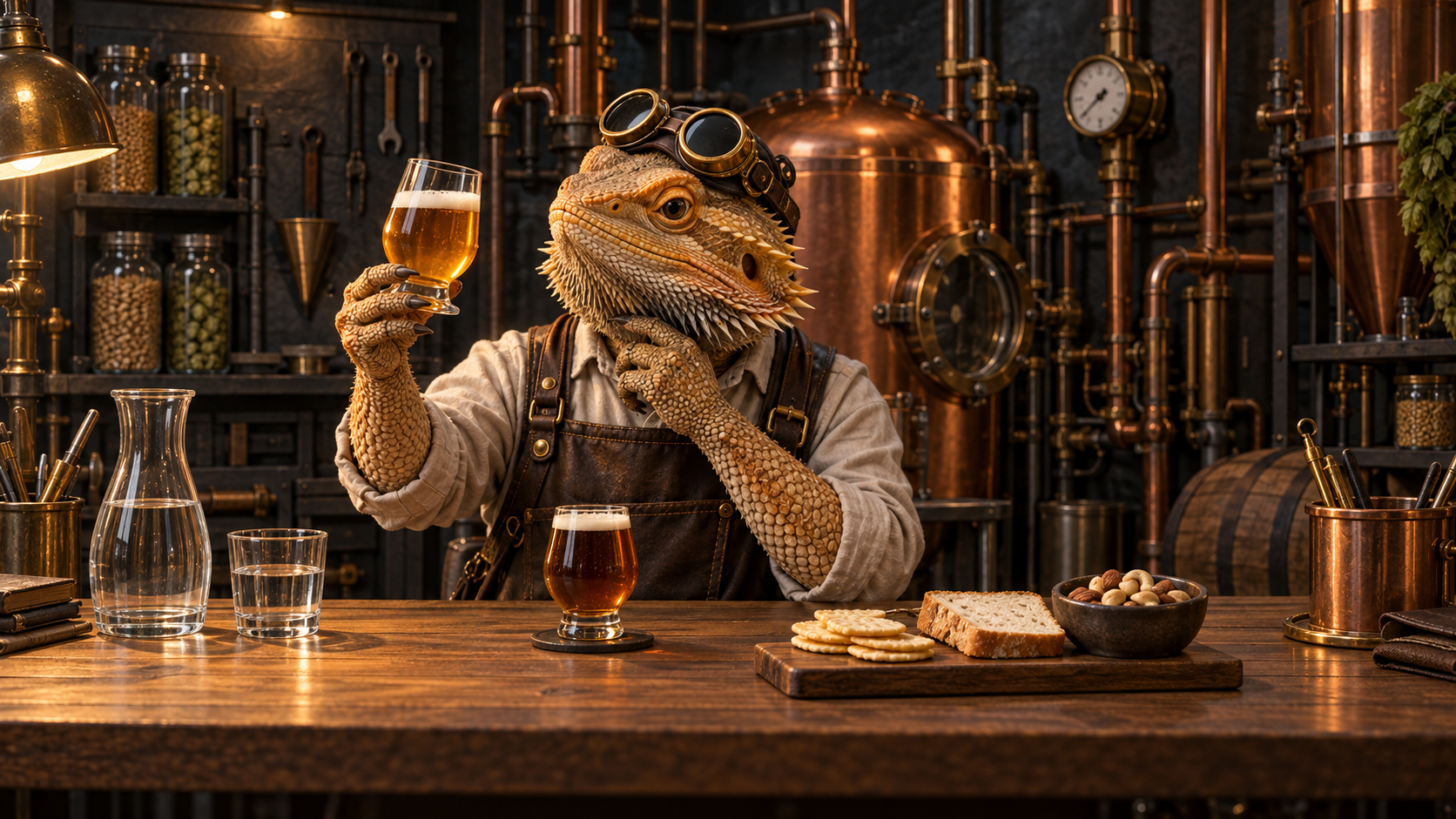
For a home comparison, choose food that supports the occasion without demanding attention. Keep the amount modest, let the beer remain the subject, and use water as the ordinary reset. Food does not change the safety rules around alcohol or make impairment disappear. Plan a small tasting and appropriate transportation before you open anything.
Decide whether you are tasting or pairing
The first decision is the useful one: are you comparing beers, or are you serving food with beer?
A pairing asks how food and beer interact. A tasting comparison asks what the beer is doing on its own. Both can be enjoyable, but they reward different setup choices. Trying to do both at once often produces a vague conclusion such as “the second beer was better with the snack,” which may say more about the snack than the beer.
Keep a comparison small: two beers, modest pours, water, and one restrained snack if you want one. Why Water Belongs on the Table for a Beer Tasting explains why water is the dependable reset between sips. A snack is supplementary, not a substitute for it.
Use neutrality as a practical filter
There is no magically flavorless food, and no need to pretend otherwise. The standard is simpler: choose something that is unlikely to leave a strong aroma, coating sensation, sweetness, heat, or seasoning that persists into the next sip.
Good candidates usually have a plain ingredient list and a familiar texture:
- Plain crackers with little or no seasoning.
- Simple bread, ideally without a strongly flavored spread.
- Unsalted or lightly salted nuts, in a small portion, when allergies and preferences allow.
- A mild, unseasoned pretzel or plain rice cracker.
These are examples, not a universal tasting kit. A reader avoiding gluten, nuts, or a particular ingredient should choose a safe alternative with the same goal: uncomplicated flavor and a texture that does not leave a thick, spicy, or sugary residue.
The food should pass a quick test. Take one bite, sip water, and ask whether the snack is still the strongest flavor in your mouth. If it is, it is probably too assertive for the comparison you planned.
Avoid the foods that change the question
Some ingredients are designed to linger. That makes them useful in cooking and distracting in a comparison.
| Snack characteristic | Why it gets in the way | Better move during a comparison |
|---|---|---|
| Chili or hot spice | Heat can dominate the next sip | Save it for a pairing meal |
| Strong garlic, onion, or herbs | Aromas stay present between pours | Choose plain crackers or bread |
| Heavy smoke or cured meat | Strong flavor and fat change the session's focus | Serve after the tasting |
| Candy, frosting, or sweet fruit preserves | Sweetness can make dry or bitter beer seem different | Keep dessert separate |
| Very salty chips or flavored snacks | Salt and seasoning persist, inviting repeated snacking | Use a small plain alternative |
This is not a prohibition list. It is a scope boundary. If the question is “Which beer works with spicy wings?” then spicy wings are exactly the right test condition. If the question is “How does this pale ale differ from that one?” they introduce a variable you do not need.
Portion for attention, not endurance
Put a small amount of the snack in a bowl or on a plate. Do not place a full bag beside the tasting glasses and call it a controlled comparison. The point is to have something simple available, not to build a grazing table that stretches the session beyond the beers you meant to evaluate.
Small pours help here too. They give you enough beer to smell, sip, compare, and revisit without making quantity the activity. Food does not speed sobriety, absorb alcohol into a safe plan, or create a reason to keep tasting after you have learned what you wanted to learn. Stop when the comparison is complete and make transportation decisions before drinking.
How To Take Useful Home Beer Tasting Notes Without Writing a Review offers a compact way to record what you noticed. Notes are more useful when the tasting remains small enough to remember clearly.
Keep the snack separate from the reset
Water is the reset. A snack is an occasional comfort and a way to avoid treating a tasting as an empty-stomach activity. Do not use food after every sip as if it were a cleanser; that simply replaces one beer flavor with another food flavor.
A practical rhythm is uncomplicated:
- Smell and taste the first beer without food.
- Make a short note if you are taking notes.
- Sip water before moving to the second beer.
- Have a small bite only when you want it, then give your palate a moment before returning to the beer.
- Revisit both beers only if you still have a clear, useful question.
The pause matters. Tasting is not a speed event. A little time gives aroma and finish space to register without requiring theatrical rituals or complicated palate-cleansing claims.
Match the snack to the beer's delicacy
The lighter and more subtle the beers, the more restrained the snack should be. If you are comparing a delicate lager or a softly aromatic pale ale, plain bread or a simple cracker is usually less disruptive than roasted, heavily salted, or oily food.
With richer beers, a mild snack may matter less, but the purpose remains the same. You are not trying to prove that a stout survives a strong cheese board. You are trying to leave enough quiet between samples to notice the beer's own balance.
If you want to explore pairings later, do it as a second, clearly labeled experiment. Choose one food, describe the question, and compare the beers with that food deliberately. It is more interesting than accidentally turning a neutral-snack tasting into an unplanned dinner.
Build a tasting table that stays useful
The table does not need much: the two beers, suitable glasses, water, a small snack, a place for notes, and a plan for what happens when the tasting ends. Keep the food in a separate small dish rather than scattered around the glasses. That reduces crumbs, visual clutter, and the unconscious tendency to keep reaching for it.
Use clean glassware. Residue can interfere with foam and aroma before the snack has a chance to complicate anything. The beer-glass cleaning guide covers that foundation; it is intentionally a different topic from selecting a snack.
The best tasting snack is almost forgettable. It makes the session comfortable, stays out of the beer's way, and lets the comparison end when you have an answer. That is a small bit of setup with a large payoff: you get a clearer sense of what you tasted, and the food can still be the main event afterward.