
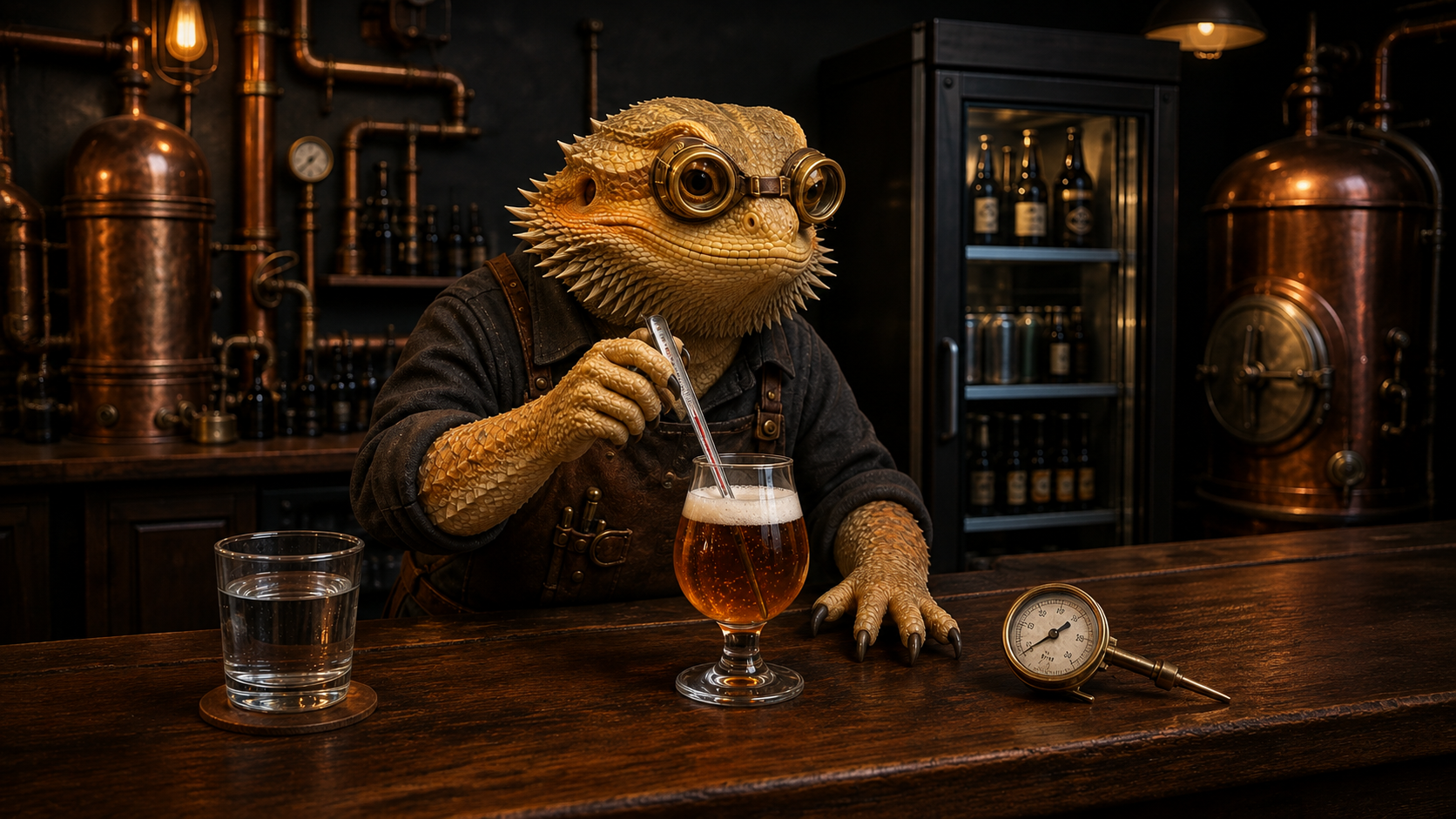
Beer temperature matters because it changes what you can notice. A very cold beer can feel crisp and refreshing, but its aroma and some flavor detail are harder to perceive. A beer that has warmed too far may feel loose, sweet, or flat. The useful middle ground is not a ritual with a laboratory notebook. It is serving a beer in a range where its intended balance has a fair chance to show up.
A thermometer is most valuable when something seems off: a new refrigerator runs colder than expected, a beer tastes muted, a highly carbonated pour will not settle, or you are comparing the same beer at two temperatures. In ordinary service, your refrigerator setting, a clean glass, and a little time are often enough.
Temperature changes the experience, not the beer’s identity
Cold holds carbon dioxide in solution and can suppress aroma. As beer warms, more aroma becomes available and carbonation can feel less forceful. Neither effect automatically improves a beer; the point is to find the condition that makes the beer coherent rather than merely cold.
The Brewers Association’s draught-quality material gives 38–44°F as a useful serving range for most styles and cautions that near-frozen service can numb the taste experience. That is a practical starting point, not a commandment for every bottle, can, and glass. The brewer’s guidance, the beer’s condition, and the room all matter.
| Beer family | Useful starting range | What to notice |
|---|---|---|
| Light lager and pilsner | 38–45°F | Crispness and carbonation without a frozen, blank finish |
| Wheat beer, pale ale, and IPA | 42–50°F | Aroma and hop character becoming clearer as it warms slightly |
| Porter, stout, and dark lager | 45–55°F | Malt, roast, and texture without letting sweetness dominate |
| Strong or barrel-influenced beer | 50–55°F | Complexity and alcohol integration without drifting to room temperature |
These are ranges, not a scoring sheet. A fresh, highly aromatic IPA may be more enjoyable near the cooler end than a malty strong ale. A brewery can also make intentional choices that differ from the usual shorthand. When the package or brewery gives a serving suggestion, try that before treating a generic chart as more authoritative.
Use the thermometer to answer one question
An inexpensive instant-read kitchen thermometer is enough. It does not need to live in the glass. Measure a small sample or use a clean probe briefly and carefully, then clean it before putting it away. An infrared thermometer can be useful for a bottle or can surface, but it measures that surface rather than the liquid, so treat it as a rough clue.
Start with a question:
- Is this refrigerator actually serving beer colder than expected?
- Did the beer become more aromatic after five minutes in the glass?
- Is the pour behaving oddly because the beer or glass is extremely cold?
- Can two adults compare a familiar beer at two sensible temperatures and describe the difference?
That is enough structure. Pour a modest amount into a clean glass, note the initial temperature, taste, and wait a few minutes. Taste again. If the beer becomes more expressive without becoming flabby or unpleasantly warm, you have learned something useful about that beer and your setup.
How To Take Useful Home Beer Tasting Notes Without Writing a Review offers a compact way to record that observation without turning it into tasting theater.
Fix the serving system before chasing a number
If beer is consistently too cold, do not keep it on the counter until every pour reaches a target number. First check the refrigerator. A small fridge thermometer can reveal whether the shelf is colder than its control suggests, and moving beer away from the back wall can reduce accidental freezing. Give the glass and the beer a few minutes rather than trying to force a rapid change.
If a beer is consistently too warm, improve the cold chain: refrigerate it well before serving, avoid warm windowsills and cars, and use an insulated carrier for the trip home. How To Store Beer at Home Without Ruining It explains why storage temperature is a freshness decision, not just a pre-pour detail.
Glassware matters too. A clean room-temperature glass is a reasonable default for most craft beer. A frosted glass can create rapid foaming and introduce freezer odors or ice, which makes it a poor diagnostic tool. How To Clean Beer Glasses So Foam and Aroma Work Properly covers the small cleaning habits that make a pour easier to judge.
Keep the experiment small and responsible
Temperature comparisons do not require a flight of high-ABV bottles. Use one beer, small pours, water, and a simple question. If more than one adult is tasting, keep the task modest and arrange transportation before drinking if you are away from home. The point is to understand a serving variable, not to manufacture an occasion for excess.
A thermometer earns its drawer space when it helps you correct a refrigerator, compare two reasonable conditions, or learn why a beer feels muted. Once you have a reliable routine, put it away. Serving beer well is a matter of attention and repeatability, not pretending every casual pour needs a calibration certificate.