
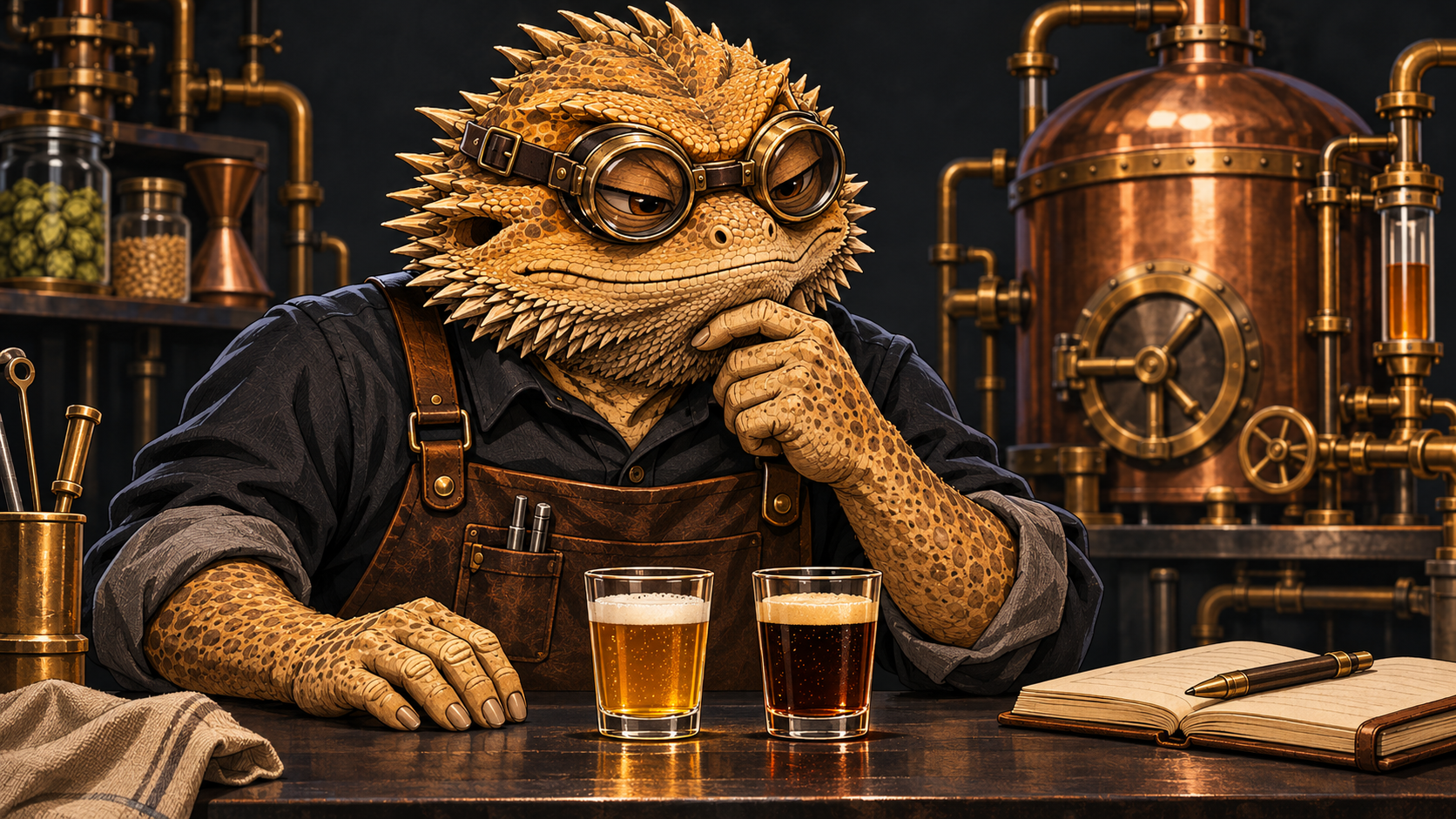
A nearly black stout can contain less alcohol than a pale golden ale. That is enough to break a surprisingly persistent beer-ordering shortcut: dark means strong, heavy, and difficult; pale means light and easy.
Color tells you something about appearance and can suggest useful questions about ingredients. It does not measure alcohol content. It also cannot tell you, on its own, whether the beer will taste sweet, feel full, or finish bitter.
The practical fix is straightforward: use the brewery's ABV information for strength, ask about flavor and texture separately, and let color be one observation rather than the answer to everything in the glass.
Ask what you mean by “strong”
People use the same word for several different experiences:
- Alcohol strength: The proportion of alcohol, commonly listed as alcohol by volume, or ABV.
- Flavor intensity: How prominent the roast, hops, fruit, spice, or other character seems.
- Bitterness: The perceived bitter taste and its persistence.
- Body: The sense of fullness or weight in the mouth.
- Alcohol warmth: A warming sensation that may be noticeable in some beers.
Those properties can occur together, but they are not interchangeable. A modest-ABV beer can have assertive roasted flavor. A stronger beer can have a relatively dry finish. Saying “I want something less strong” works better when you specify whether you mean less alcohol, less bitterness, or a gentler flavor.
This distinction also makes a server's answer more useful. “Do you have a lower-ABV dark beer with restrained roast?” communicates a real preference. “Nothing too dark” excludes options without explaining what you want to avoid.
The beer-menu guide covers the broader ordering decision. Here, the narrower job is to stop appearance from making unsupported promises about strength and flavor.
Color and alcohol come from different parts of the process
Malt processing is an important source of beer color. Kilning and roasting develop different color and flavor contributions, which brewers combine through their ingredient choices. The BJCP malt and adjunct guide describes those treatments and the role of fermentable ingredients.
Alcohol develops when yeast ferments available sugars. How much fermentable material goes into the wort and how fermentation proceeds matter to the final strength. Making a beer darker does not, by itself, specify either of those quantities.
A recipe can get considerable color from a relatively small portion of dark grain while using pale malt for much of its fermentable base. Another recipe can produce a pale, stronger beer using pale ingredients and additional fermentable sugar. A color description does not reveal the recipe proportions or fermentation outcome.
Treat the two results as related products of a recipe, not two readings from the same instrument. Within a particular brewery's closely related beers, a darker variant might also happen to be stronger. That local pattern is not a rule you can carry to an unfamiliar menu.
There is another useful restraint here: you cannot reconstruct an ingredient list from a color name. A red or brown appearance gives you a reason to ask about ingredients; it does not establish exactly which malt, fruit, or other addition produced it.
Two style examples break the shortcut
BJCP's published style ranges make a useful comparison:
| Style | Color range, SRM | Alcohol range, ABV |
|---|---|---|
| Irish stout | 25–40 | 3.8–5.0% |
| Belgian golden strong ale | 3–6 | 7.5–10.5% |
The darker style's alcohol range is below the pale style's range. You do not need an exotic exception or a novelty beer to find that reversal.
These are style guidelines, not measurements of every beer using either label. A brewery may make a beer outside a guideline, and a menu may use a style term loosely. Check the ABV of the exact beer being served instead of assigning it the midpoint of a range.
The lesson is not that pale beer is stronger. That simply replaces one bad shortcut with another. The lesson is that color does not provide the missing alcohol information.
When ABV is unavailable, ask the producer or server. If you need to stay below a particular strength and cannot get a reliable answer, choose an option with published information rather than estimating from appearance or perceived smoothness.
What a color number actually tells you
SRM, the Standard Reference Method, is a beer-color scale. It is not an alcohol scale, a bitterness score, or a nutritional label.
The BJCP color reference cautions that SRM describes color density more than a complete hue or shade. It also notes that viewing conditions affect perceived color. That is a good reason to avoid announcing a precise SRM value from a phone photo taken in a dim bar.
For ordinary ordering, a description such as pale gold, amber, brown, or nearly black is usually sufficient. A numerical color value can help compare recipe targets or style expectations, but it does not make the rest of the beer's character measurable by inspection.
Use a similar glass, fill depth, background, and light when comparing appearance. A wide, deep pour and a shallow sample are different viewing arrangements. A cloudy beer also presents differently from a clear one. Record those differences before deciding that two photos prove a recipe change.
None of this makes color uninteresting. Appearance is part of the experience. It just has a smaller, more defensible job than people often assign it.
Separate roast, sweetness, bitterness, and body
Dark color can make roasted character a sensible question, but “dark” is not a tasting note detailed enough to choose a beer. Ask whether the roast is restrained, coffee-like, chocolate-like, or sharply burnt, and whether it dominates the finish. Those answers are much closer to the preference you are trying to express.
Sweetness needs its own question. A dark beer is not automatically sweet, and a pale beer is not automatically dry. Caramel-like aroma, residual sweetness, and a full mouthfeel can be described separately. The beer-sweetness explainer explains why a familiar sweet-food association is not a sugar measurement.
Bitterness also deserves direct language. Ask how bitter the beer tastes and whether that bitterness lingers. “Black” does not answer the question any more than “gold” does. A style description and the brewery's own tasting notes give you a more useful starting point than a color comparison.
For body, ask about fullness, dryness, and carbonation rather than using “heavy” as a synonym for dark. Two people can agree that a beer looks black while disagreeing about whether its texture feels substantial. Better vocabulary lets them discover what they actually disagree about.
Avoid turning any of these impressions into calorie claims. Color, smoothness, and perceived sweetness are not nutrition data. If nutrition matters to the decision, use information for the actual product.
Use a short menu-reading checklist
Before ordering an unfamiliar beer, work through these questions:
- What is this exact beer's ABV? Read the current menu, package, or producer information; ask if the sources disagree.
- What serving size is available? Compare the actual pour you are considering, not just two percentages.
- Which flavor matters to me? Ask specifically about roast, bitterness, sweetness, fruit, or spice.
- What texture do I want? Ask about dryness, fullness, and carbonation separately from color.
- What remains uncertain? Choose a smaller pour or a clearly described alternative when the description leaves an important question unanswered.
A smaller glass is not automatically the lower-alcohol choice; serving volume and ABV both matter. You can compare them without a drinking challenge. For example, 8 fluid ounces at 8% ABV and 16 fluid ounces at 4% ABV contain the same calculated volume of alcohol. That arithmetic is about the listed serving, not a safety threshold or permission to drive.
If you want to test your expectations, first compare published descriptions of one pale beer and one dark beer without tasting either. Write down your predicted ABV and then check the producer's figures. Any optional tasting can use small samples, with no need to finish them. The useful observation is which assumptions you made before seeing the evidence.
Let color stay interesting without making it the verdict
Beer color is a useful opening observation. It can guide a conversation about malt character, recipe intent, or how the beer looks under different conditions. It cannot replace the ABV listing or a description of the flavor you actually care about.
Order by the information that answers your question: alcohol content for strength, tasting descriptions for flavor, and serving details for the pour. A black beer should not have to defend itself against a pale beer's appearance. Both deserve to be judged with better evidence than that.