The first sip of a beer can prickle along your tongue, and the second can feel almost creamy once you pay attention to the liquid underneath. Both observations can be right. The prickle and the weight of the sip describe different parts of the same beer.
Carbonation is easy to notice and surprisingly easy to misname. A sharp sip gets called bitter. A lively beer gets called thin. A tall head gets taken as proof that the beer is still full of gas. If you want to figure out what you liked about the glass, it helps to stop using one adjective for all three observations.
Dissolved gas and visible bubbles tell different stories
Carbon dioxide can stay dissolved in beer under pressure. Once you open the package and pour, some of that gas leaves the liquid. Bubbles can grow at nucleation sites such as small imperfections in a glass. The tiny stream you see coming from one spot tells you where gas is coming out. It gives you no reliable reading of how much is still in the beer.
Temperature matters too. At a given CO₂ pressure, colder beer can hold more dissolved gas at equilibrium. When a draft system warms up without a corresponding change in pressure, CO₂ can come out of solution on the way to the glass. The first thing you see might be foam. The first thing you taste, once there is enough liquid to sip, might be a quieter beer than you expected. The Brewers Association's carbonation primer explains the temperature and pressure relationship in draft service.
A beer's head also depends on how the foam forms and how fast it collapses. Pouring, glass condition, and the beer itself can all change the picture. Look at the head if you are curious about the pour. Pay attention to the liquid if you are curious about the bite. The guide to beer foam goes deeper into what the head can tell you.
Pay attention to the sting as well as the fizz
Bubbles contribute to the fizzy texture, but the sharp sensation has a chemical component. In the mouth, an enzyme called carbonic anhydrase speeds the reaction of dissolved CO₂ with water to form carbonic acid. The resulting local acidification can stimulate nerves involved in oral irritation. Wise and colleagues found that people could still feel carbonation bite in carbonated water when the researchers suppressed bubble formation with pressure. Their second experiment also found that bubbles could modify perceived bite. See the human carbonation bite study.
There is a taste component as well. Chandrashekar and colleagues identified a role for sour-sensing cells in mice exposed to CO₂. That study helps explain why sourness belongs in the conversation. It does not tell you how much of the tartness in a particular beer came from carbonation. Beer can have other sources of acidity, and a human sip involves texture, taste, and smell together. See the carbonation taste study.
Separate the sensations in a sip
Try describing the first contact, the weight of the liquid, and what remains after you swallow. The timing can help direct your attention. It cannot identify the cause on its own.
| Sensation | What to pay attention to |
|---|---|
| Carbonation bite | An immediate prickle or sting where the liquid touches your tongue. |
| Body | The apparent weight or fullness of the liquid as it moves around your mouth. |
| Bitterness | A taste that can develop during the sip and linger after the initial fizz fades. |
| Sourness | A tart taste that may accompany the prickle or still be evident when the beer has lost much of its fizz. |
| Astringency | A drying or rough feeling that can become more obvious when you move your tongue against your cheeks. |
A fuller beer can have a punchy first sip. A lightly carbonated beer can still be thin. Try writing down two observations, such as “sharp on contact, medium weight,” before reaching for a verdict. If you are trying to name the ending of a sip, the guides to perceived bitterness and drying mouthfeel give you more ways to describe it.
It helps to tune out the visual cues for one sip. A column of bubbles is easy to spot, while the difference between a prickly opening and a lingering finish takes a moment to notice. If two tasters call the same beer sharp, ask when they felt it and whether it was a taste or a physical sensation. They may agree on the beer and be talking about different parts of the sip.
Try two small pours from the same package
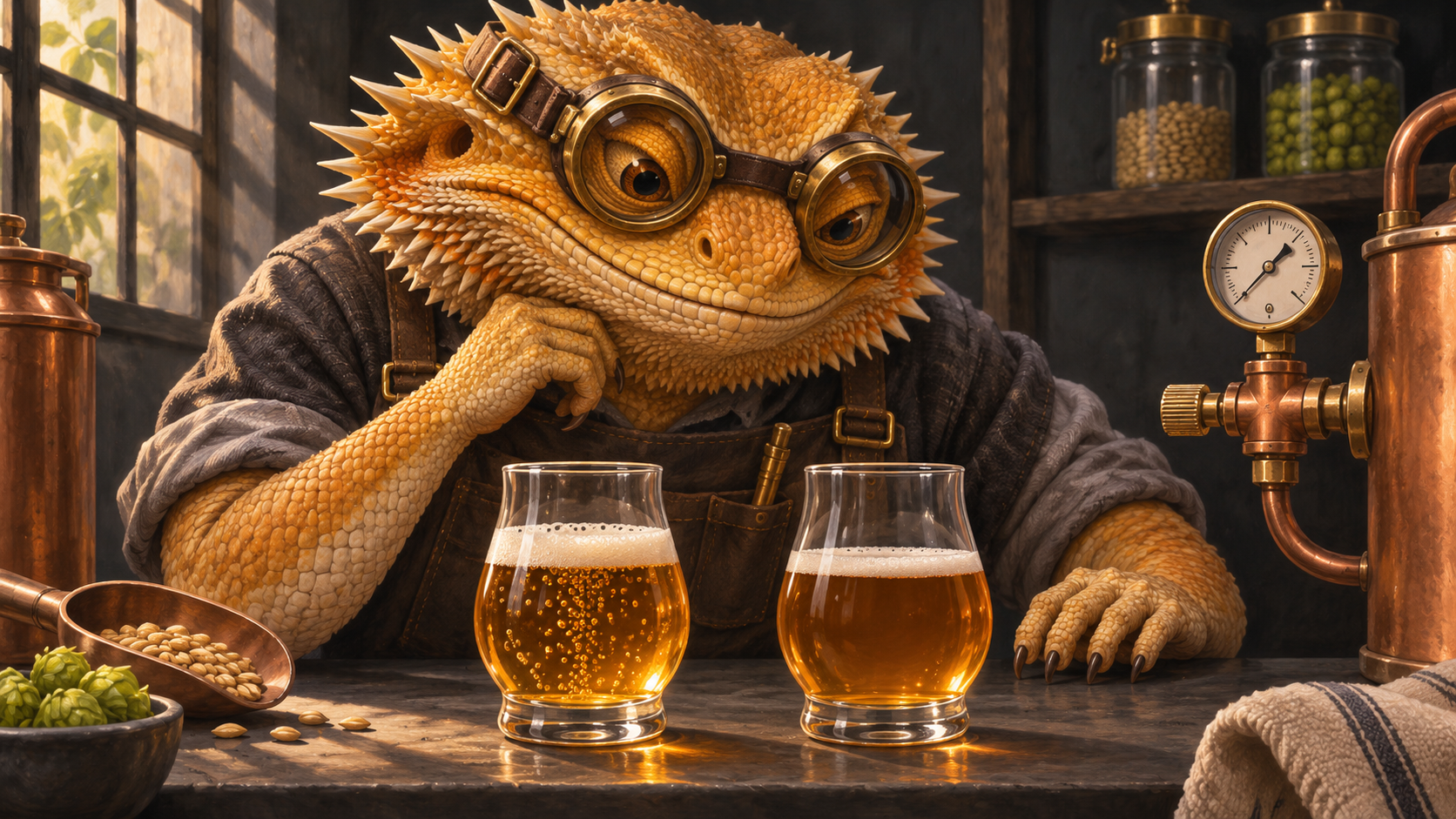
Pour a small sample into each of two matching clean glasses. Give one sample a gentle stir with a clean spoon to encourage some gas to escape. Leave the other alone. Taste them close together at the same approximate temperature. A sip or two from each is plenty. Use a carbonated nonalcoholic beer if you prefer.
Pay attention to the intensity of the prickle, then to the weight of the beer and any tartness or bitterness you can still pick out. You might find the quieter glass easier to describe, or you might prefer the brighter one. If the difference seems small, that is a perfectly reasonable observation. Without measuring the dissolved gas, you do not know how much difference the stir made.
Stirring can change foam and release aroma as well as CO₂. Time in the glass, glass temperature, and knowing which sample you stirred can also influence what you notice. Treat this as a way to practice distinguishing sensations. For a comparison that deliberately varies serving temperature, see the two-temperature experiment.
Use the distinction at the next pour
If that first sip feels sharper than you want, give the glass a little time and see whether the prickle settles. If the finish still tastes bitter or tart, you have two separate descriptions to work with. If you are troubleshooting how the beer gets into the glass, the home pouring guide walks through the serving routine.
The next time you call a beer crisp, take one sip to figure out what you mean. It could be a sharp opening, a light body, or a finish that clears quickly. Once you give each sensation its own name, you have a much better chance of asking for another beer you will enjoy.